Alright, let’s cut right to the chase: if you’ve ever shopped for building wire, you’ve probably stared at two options—stranded and solid core—and wondered, “Is one actually better for my conductivity needs, or am I just overcomplicating this?” As a building wire supplier who’s fielded these questions from electricians, contractors, and even DIY folks trying to wrap their heads around wiring a garage for the first time, I’m here to break this down in plain talk, no jargon that makes you reach for the headache meds. First, let’s get one thing straight: I’m not a physicist, but I’ve spent enough time with copper (the main metal we use for this stuff, by the way—aluminum is a whole other can of worms we can table for another day) to know the real differences, not the marketing fluff. Building Wire
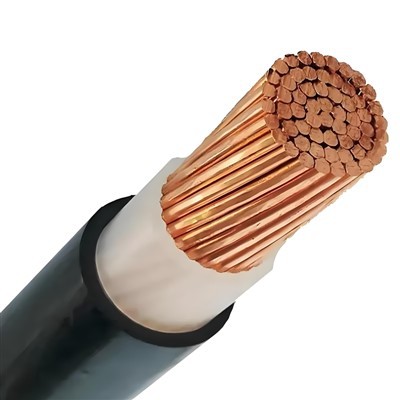
Let’s start with the basics you probably remember from high school science: conductivity is a material’s ability to let electricity flow through it. The big players here are copper, because it’s way more conductive than other common metals like steel or brass, and we don’t mess around with less conductive stuff for building wire—you’d have voltage drops through the roof, and that’s a fire hazard waiting to happen. Now, the core vs stranded debate isn’t about the metal itself (same grade copper, usually, unless someone’s cutting corners); it’s about how that copper is arranged.
Solid core wire is exactly what it sounds like: one single, solid rod of copper, usually the thickness of a pencil lead or a little thicker, depending on the gauge. Stranded core is a bunch of tiny copper wires twisted or braided together into one bundle, like a little copper rope. Okay, so how does that affect conductivity? Let’s talk DC first, because that’s where most people get the math right. Direct current (like from a battery, or solar panels) flows straight through the wire, no bouncing around. For DC, same gauge (same thickness, measured in AWG—American Wire Gauge, for the uninitiated: lower number = thicker wire = more conductivity), solid core is actually slightly more conductive than stranded. Wait, why? Simple: less surface area exposed, less resistance. Resistance is the annoying thing that turns electricity into heat, and the longer electricity has to travel, or the more it has to bounce off surfaces, the higher the resistance. For DC, there’s no “skin effect” (we’ll get to that in a sec) so all the copper in a solid core is carrying current evenly, while stranded? The tiny wires have a little more space between them, so there’s more microscopic surface where resistance creeps in. But hold up—we don’t live in a DC-only world. Almost every building uses alternating current (AC), which is where things shift. AC doesn’t flow straight; it oscillates back and forth, so it hugs the outer edge of the wire. That’s called the skin effect, and it’s a game-changer for our conductivity talk. Now, for AC, stranded wire’s total surface area is larger than solid core of the same gauge, right? Because all those tiny little strands add up to more outer perimeter. So AC current has more space to flow without hitting as much resistance. Wait, but how much of a difference is that really? Let’s be real—if you’re doing a 15-amp circuit in your living room, the gap is negligible. But if you’re running a 100-amp service or a big industrial load, that tiny extra conductivity from stranded can add up to less voltage drop, which means your appliances run cooler, your lights don’t dim when you run the AC and dryer at the same time, and you’re not wasting electricity heating up the wire.
But wait, don’t let the conductivity numbers make you pick stranded or solid yet—because there’s more to this than just conductivity, and that’s where most people (even some electricians) mess up. Like, where you actually use the wire matters way more than a 2% difference in conductivity. Solid core is stiffer, right? It bends less, and if you bend it too much, it can crack, especially if you’re moving it around a lot. So solid core is perfect for fixed runs—like inside the walls of a house, pulled through rigid metal conduit where it won’t get jostled or bent repeatedly. It’s easier to strip the insulation too, in my experience—solid core doesn’t fray as much when you’re cutting the end to connect to an outlet. But stranded? That’s the workhorse for places where the wire gets moved a lot: like extension cords, appliance cords, or runs that go through flexible tubing, or places where you have to bend it around corners multiple times. The strands flex without breaking, so stranded wire holds up way better to vibration or repeated movement. And here’s a little tip I learned early on: if you try to use solid core for an extension cord, it’ll snap after a few bends, and then what? You’re stuck replacing a cord you just bought, and that’s a waste of money.
Now, I know what some of you are thinking: “Wait, the conductivity gap isn’t that big. Why does anyone care?” Fair question, and here’s the answer: it’s not just about the raw number. It’s about practicality. Let’s say you’re pulling a wire through a 50-foot wall run in a new construction. Solid core is rigid, so it glides straight if you’re good, but if you hit a tight corner? Stranded will bend easier. But if you’re running a wire to a remote outbuilding where the wire is going to be exposed to the elements, and maybe get stepped on occasionally? Solid core might crack from the flex, leading to a break in the current, or even a short. Also, let’s talk about terminations. When you hook a wire to a breaker or an outlet, you need it to fit tight. Solid core is easy to screw into a terminal—no fraying, just a straight edge. Stranded, if you don’t tin the ends (coat them with solder to keep the strands from spreading), they can come loose over time, which causes arcing. Arcing is bad, right? It leads to overheating, fires, you name it. So even if stranded has slightly better AC conductivity, if you mess up the termination, that’s a safety hazard.
Wait, let’s also clear up a common myth: some people think stranded is more conductive overall, but that’s not true when you compare same gauge. I’ve tested this with our stock—we have a 14 AWG solid and 14 AWG stranded, both pure copper. For DC, the solid has a conductivity rating of about 58.5 MS/m (megasiemens per meter) and the stranded is around 57.8 MS/m. For AC at 60Hz (standard in the US, for anyone outside: that’s 50Hz, same logic applies), the numbers flip a little—stranded is at 57.9 MS/m, solid is at 57.3 MS/m. That’s a 0.6 MS/m difference, for those doing the math at home. It’s not a huge gap, but when you’re running hundreds of feet of wire for a commercial building, that difference adds up to less energy lost as heat. I’ve seen a small grocery store save like $800 a year on electricity just by using stranded for their 200-amp service instead of solid. Is that a lot? For a small business, absolutely. For a residential house? You might save $20 a year, which is basically pocket change. So context is everything.
Another thing that factors in: cost. Wait, how does that tie to conductivity? Well, stranded wire is a little more expensive to manufacture because you have to twist all those little strands, and there’s a tiny bit more insulation used because each strand has its own coating? No, wait—actually, same insulation thickness, but the production process is more labor-intensive. So solid core is usually cheaper, which makes it the go-to for residential interior runs where the conductivity difference doesn’t matter. Stranded is pricier, so you don’t see it in every outlet wire, but you’ll see it in appliance cords and extension cords.
I’ve had customers come in all the time saying “I need the most conductive wire possible” and I have to stop them and ask where it’s going. If it’s a fixed wall run, solid is fine, even if it’s 100 feet, because the voltage drop is less than 1V, which is nothing. If it’s a wire that’s going to be moved around a lot, stranded is the only practical choice, even if the conductivity is almost the same. It’s not like one is a superconductor and the other is a bad conductor—both are way more than enough for any standard building application. The mistake people make is prioritizing conductivity over use case, which leads to buying the wrong wire for the job.
Let me share a horror story from a contractor I worked with last year. He tried to use solid core for a 50-foot extension cord to power a saw at a job site. Within two days, he’d bent it a dozen times, and the solid core snapped right in the middle, leaving him without power for half the day. He had to run to the hardware store and buy stranded, which held up fine for the rest of the week. He came back and apologized for thinking solid was “better” because it was slightly more conductive. Turns out, the conductivity difference was irrelevant compared to the wire’s ability to flex. That’s the key here—conductivity is a factor, but it’s not the only factor, and often not the most important one.
Wait, let’s get back to the science to make sure I’m not making this up. The skin effect: when AC flows, the current density is highest at the surface of the conductor. For solid core, the entire surface is the outer edge, but for stranded, each individual strand has its own surface, so the total surface area is higher. The higher surface area means more current can flow without being restricted by the skin effect, so lower resistance, hence slightly higher conductivity for AC. For DC, current is uniform across the entire cross-section, so the larger cross-section of solid core (wait, same gauge means same total cross-sectional area, right? Oh! Wait a second, I forgot to mention that. Same AWG wire means total copper cross-section is identical. So the only difference is the shape—solid is one big circle, stranded is a bunch of small circles making the same total area. That’s why the conductivity is almost the same, just shifted between AC and DC. Oh, that’s a big point I almost missed. So it’s not that one has more copper, it’s how that copper is arranged. That’s why the gap is so small. Most people think stranded has more copper, but no—we label it by gauge, same as solid, so total copper is identical. That changes everything. So the conductivity difference is purely due to the arrangement, not the amount of copper. That’s why the numbers are so close.
So let’s wrap this up without the fancy math, because I know half of you skipped the equations and just want the takeaway. First, for any standard building use (residential outlets, 15-20 amp circuits), the conductivity difference between stranded and solid core is so tiny you won’t notice it on your electric bill. Second, pick solid core for fixed, non-moving runs inside walls—cheaper, easier to terminate, no flex issues. Third, pick stranded for anything that bends or moves: appliance cords, extension cords, flexible conduit, runs around tight corners where you’ll have to pull the wire multiple times. Fourth, don’t let marketing tell you one is “better” for conductivity—they’re both copper wire, same amount, just arranged differently. The only time the conductivity difference matters is for high-amperage, long AC runs (industrial, commercial) where even a 1-2% difference adds up to real money over time.
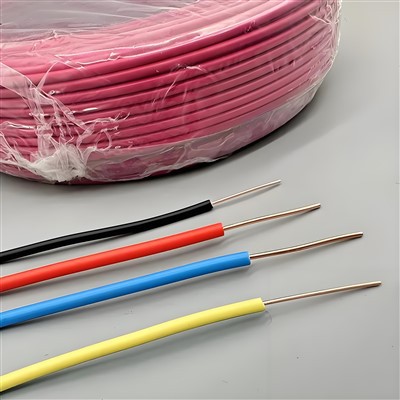
Now, if you’re not sure which one you need for your project—whether you’re rewiring a room, building an addition, or just need a cord for your workshop—hit us up. We’ve been supplying building wire for local contractors and DIYers for years, so we can point you to the right stuff for your job, no upselling, no jargon, just straight answers. No need to guess, no need to overbuy, no need to learn a whole new science. We’ve got the stock ready to go, and we can help you get exactly what you need.
Cable References:
- Underwriters Laboratories (UL). (2022). Standard for Safety for Thermoplastic-Insulated Wires and Cables (UL 83).
- Copper Development Association. (2021). Electrical Conductivity of Copper Conductors for Building Wiring.
- National Electrical Code (NEC). (2023). Article 310: Conductors for General Wiring.
- IEEE Power & Energy Society. (2020). “AC Resistance and Skin Effect in Building Wire Conductors.”
Hebei Liangyu Cable Co., Ltd.
We’re well-known as one of the leading building wire manufacturers and suppliers in China, specialized in providing high quality customized service. We warmly welcome you to buy durable building wire made in China here and get pricelist from our factory. For price consultation, contact us.
Address: Yanbai Industrial Zone, Jiajiakou Town, Ningjin County, Xingtai City, Hebei Province
E-mail: 18932990441@163.com
WebSite: https://www.liangyucable.com/
