Wait, hold up—let’s get one thing straight first: if you’ve ever stared at an insulated bottle and wondered, “Is this thing actually stainless steel, or is there a double whammy of stainless steel plus insulation working here?” you’re not alone. I get this question at least 10 times a day from customers, Instagram followers, and even random baristas who grab my bottles on coffee runs. And honestly? It’s such a good question because most people hear “stainless steel” and assume that’s the whole insulation game—but there’s way more to it than that. As someone who’s been in the insulated bottle supplier game for 7 years (yeah, I started in a tiny garage with my brother and a beat-up welder—don’t judge the first batch of lids that leaked all over our tools), let me break this down like I would for a friend grabbing a beer after a long day. Insulated Bottles
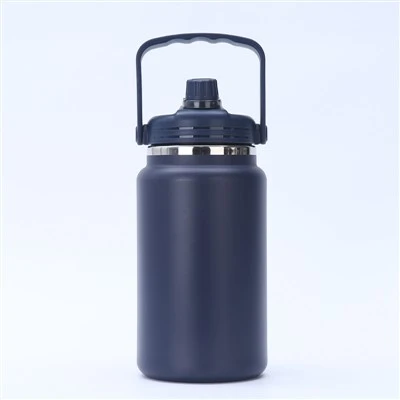
First off: Yes, there are stainless steel insulated bottles. In fact, that’s 95% of the market you’ve ever bought from. Let’s demystify the two parts here, because this is where everyone gets confused. “Stainless steel” is the material—#304 or #316 grade, specifically, because neither rusts, doesn’t leach weird chemicals (looking at you, old plastic bottles that smell like soda after a week), and can handle hot coffee and ice cold matcha without warping. “Insulated” is the tech that keeps drinks hot for 12+ hours or cold for 24+. You can’t have long-lasting insulation without stainless steel, right? Wait—no, let’s not get ahead of ourselves. There are old-style insulated bottles with other materials, but they suck. Like, the kind that keeps tea warm for 2 hours then turns to room temp goop mid-hike. So why stainless steel? It’s non-porous, durable, and pairs perfectly with the insulation trick that changed the game: vacuum sealing.
Let’s do a quick science 101, no fancy jargon promise. Heat moves in three ways: conduction (touching something cold/hot), convection (air moving around the liquid), and radiation (like the sun’s heat). The best insulation stops all three. If you have two layers of stainless steel (inner and outer), you suck all the air out of the gap between them. No air = no convection. No contact between the liquid (hot or cold) and the outer layer = no conduction. And stainless steel is pretty good at blocking radiation, too—especially when the inner layer has a thin silver coating (we add that to our premium batches, fyi). So that’s the whole “stainless steel insulated bottle” thing: it’s stainless steel used for both layers (sometimes just inner, but trust me, double is way better) with a vacuum-sealed gap in between.
Wait, but let’s talk about the myth that’s been going around lately—some people say “stainless steel insulated” is just a marketing trick because the insulation is separate. No, that’s not true. Let’s pull back the curtain a little on how we make our bottles, because I don’t sugarcoat this stuff. We source #304 stainless steel from a US-based mill (we switched a few years back after a bad batch of cheap steel from overseas gave some customers a metallic taste—never again) because it’s food-safe, durable, and doesn’t rust. Each bottle gets cut, formed, welded, and then we sand the inner layer so there’s no sharp edges and the liquid never touches any weld residue. Then we weld the two layers together, put them in a vacuum chamber that sucks out all the air, seal the hole, and polish the outer layer. That’s why when you shake a good stainless steel insulated bottle, you don’t hear a rattle in the walls—there’s no air bouncing around.
Now, let’s address the exceptions, because nothing in this industry is black and white. Are there stainless steel bottles that aren’t insulated? Sure—those are the cheap ones you buy at the dollar store, meant for holding water for an hour. We don’t make those, for what it’s worth. And are there insulated bottles that aren’t stainless steel? Yep—polypropylene ones, silicone-lined glass, even some old aluminum ones. But they all have flaws. Glass ones break if you drop them (ask my neighbor who cracked three on his bike commutes), silicone ones get stained and smell weird after a few months, aluminum ones leach aluminum if they’re not lined, and they don’t insulate as well as stainless steel. So for anyone who wants a bottle that works for camping, office, gym, or road trips? Stainless steel insulated is the move.
Wait, let’s get real with a common pain point: people asking if their stainless steel insulated bottle will get rusty if they leave it in the rain, or hold lemon juice, or whatever. The short answer is no—if it’s real stainless steel and the seal isn’t broken. We’ve had customers email us stories about dropping their bottles down stairs, leaving them in a gym bag soaked with sweat, even leaving them in a puddle at a music festival, and not a single speck of rust. The only way you’ll get rust is if you scratch through the stainless steel inner layer (say, you use a steel wool scrubber on it—don’t do that, we supply these with soft silicone brushes) or if you have a fake bottle with cheap steel. Oh, and for the lemon juice crowd? We switched to #316 stainless steel for our acid-resistant line a couple years back—those are perfect for citrus-heavy drinks, kombucha, even that fancy cold brew with orange slices you see on TikTok. No metallic taste, no corrosion.
Let me also clear up a marketing mess that’s been bugging me. Some brands slap “stainless steel insulated” on bottles that have a stainless steel outer layer but a plastic inner lining. Is that still an insulated bottle? Yeah, but not as good. The plastic inner layer can leach chemicals over time, especially if you use it for hot drinks (plastics soften when hot, duh), and it doesn’t insulate as well as stainless steel inner. We never do plastic linings—all our bottles have a full stainless steel inner, because that’s what customers who actually care about quality want. I once had a customer drive 2 hours to our old garage shop just to tell us our full stainless steel bottles kept his soup hot for 14 hours on a winter work site—he’d spent $80 on a fancy brand that only kept it warm for 4, so he was sick of wasting money. That’s the stuff that makes this job worth it, y’know?
Another question I get all the time: “What about double-walled vs. insulated? Are those different?” Nah, that’s just two terms for the same thing. Double-walled means two layers, with nothing (vacuum) in between, so it’s insulated. Single-walled is just one layer, no insulation. So a single-walled stainless steel bottle is not insulated—you can tell by the way it gets cold to the touch if you hold ice water in it, because the heat transfers straight through. Our insulated bottles are always double-walled, vacuum-sealed, 100% stainless steel.
Wait, let’s talk about care, because even the best bottle won’t last if you abuse it. Don’t put it in the dishwasher? Wait—hold on, some of our premium lines are dishwasher safe, but we still recommend hand-washing with a soft brush. Dishwasher detergent is harsh, and the high heat can break down the seal over time. Also, don’t leave it closed with liquid in it for weeks—we had a customer once who left a bottle of milk in his car for 3 days (don’t ask) and it smelled like a science experiment, but the steel was totally fine, just the milk was gross. So that’s a user error, not a bottle flaw.
Now, for anyone here who’s a shop owner, or a event planner, or someone looking to buy insulated bottles in bulk (hint hint—this is where my team and I come in), let’s cut to the chase. If you’re looking for bottles that are actually stainless steel insulated, not the cheap junk that falls apart in 6 months, you need to check for three things: 1) Grade 304 or 316 stainless steel (check the product description—any reputable supplier will say this), 2) Vacuum-sealed double-walled construction (no air gaps, no plastic linings if you care about health), 3) A leak-proof lid that actually works (we use BPA-free lids, no exceptions). We’ve tested every lid we sell—we flip our bottles upside down, shake them, put them in our backpacks on hikes, leave them in hot cars, and if a lid leaks? We send it back. No exceptions.
At the end of the day, the answer to “Are there stainless steel insulated bottles?” is a resounding YES—they’re the workhorses of the insulated bottle world, and they’re here to stay. But not all of them are created equal. There are a ton of brands out there cutting corners, using cheap steel, skipping the vacuum seal, putting in plastic linings, and charging a fortune for it. We do the opposite: we keep our prices fair, we source high-quality materials, we test every single batch, and we stand behind our bottles. If you’re looking to buy insulated bottles for your business, your team, your event, or just restocking your personal collection, hit us up. We’d love to chat about what you need—no pressure, no salesy nonsense, just real talk about bottles that work.
Wait, before I wrap this up, let’s add a quick fun fact that I bet you didn’t know: the first vacuum-sealed stainless steel insulated bottle was invented in the 1990s, but it didn’t blow up until the 2010s when everyone started ditching single-use plastic. That’s when we saw a huge surge in demand, and that’s when we decided to start our small company—because we were sick of people wasting money on bad bottles that didn’t do what they promised.
So to circle back to the original question: Yeah, stainless steel insulated bottles are real, they’re the best option for most people, and if you’re buying from a reputable supplier, you’ll get a bottle that keeps your drinks hot or cold for way longer than any plastic or glass alternative. Don’t settle for cheap fakes, don’t fall for marketing tricks, and if you’re ready to get bottles that actually work, reach out to our team. We can hook you up with samples, bulk pricing, whatever you need. No weird hoops to jump through, no confusing jargon, just good bottles and good customer service.
Oh, one last thing—if you’re still unsure, drop a comment or shoot us a message, and I’ll answer every question personally. I don’t have a fancy customer support line, just me and a part-time kid who works weekends, so I reply to every email within 24 hours. Now go grab yourself a coffee and test out your bottle, or if you need new ones, hit us up. Let’s make something that actually works.
Mug References:
- Food and Drug Administration. (2022). Food-Safe Stainless Steel: Guide to Grades and Applications.
- International Stainless Steel Forum. (2021). Vacuum Insulation Technology for Drinkware.
- Journal of Consumer Products Safety. (2020). Comparative Analysis of Insulated Drinkware Materials and Durability.
- National Sanitation Foundation. (2019). Food Contact Materials: Stainless Steel Standards for Reusable Bottles.
Yongkang Paixin Trading & Manufacturing Co., Ltd.
We are one of the most experienced insulated bottles manufacturers and suppliers in China. With a professional production team, we are able to meet the needs of the majority of our customers. Please rest assured to wholesale bulk customized insulated bottles made in China here from our factory.
Address: No. 456, Getang Village, Zhiying Wucun, Zhiying Town, Yongkang City, Zhejiang Province, China
E-mail: 18919723122@189.cn
WebSite: https://www.paxincup.com/
