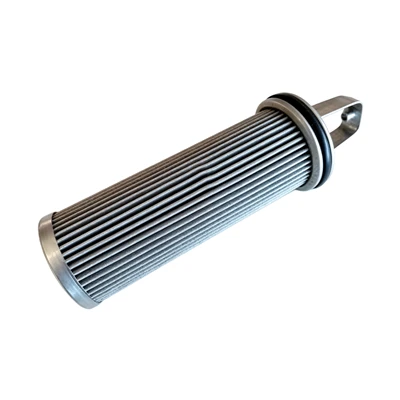
If you’re working in power generation, industrial manufacturing, or any facility that runs gas turbines, you already know how critical those filters are. A bad filter doesn’t just let dirt through—it can jam turbine blades, increase fuel burn, and end up costing you tens of thousands in unplanned downtime. As a filter supplier, I get asked all the time: “How do I actually test if my gas turbine filter is doing its job right?” It’s not just a quick visual check, and it’s way more involved than the generic filter tests you might see for HVAC parts. Let me break this down like I explain it to my clients every week—no jargon overload, just straight, actionable stuff. Gas Turbine Filter

First, let’s start with why testing efficiency matters specifically for gas turbines, not any other filter. Gas turbines suck in massive amounts of air to mix with fuel for combustion. Even tiny particles—like 1-micron dust, soot, or salt from coastal air—act like sandpaper inside the turbine. Over time, they wear down compressor blades, which drops efficiency, raises maintenance costs, and can even cause a full turbine shutdown. So “filter efficiency” here isn’t just about how much gunk it catches; it’s about how well it stops the stuff that will break your turbine.
Now, the first step most folks skip is pre-test prep. You can’t just grab a random filter off a shelf and test it. I always tell clients to make sure their test setup matches the actual conditions their turbine faces. For example, a filter for a turbine in a desert environment needs to handle high dust loads and dry air, while one in a coastal refinery has to resist salt moisture. If you test a desert filter in a lab with salt spray, you’re wasting your time. Pre-test prep also includes checking the filter for damage—tears in the media, mis-sealed frames, or gaps around the edges. Even a tiny 2-millimeter gap can cut efficiency by 30% or more, so skip testing a filter with obvious flaws.
Next, the main test methods we use as suppliers. There are two standard ones, and both have their perks. Let’s go through them simply:
First, the Gravimetric Efficiency Test. This is the oldest, most reliable one for real-world performance. Here’s how it works: you run a steady flow of air (matched to the flow your turbine uses) through the filter at a set velocity. Before the air hits the filter, you pass a known amount of test dust—usually ISO 12103-1 A2 Fine dust, which is a standard for industrial particulates—through the air stream. Then you measure how much of that dust gets caught by the filter, and how much passes through to the other side. The formula is simple: (Weight of dust caught by filter / Total dust fed to test) x 100. So if you feed 100 grams of dust, and the filter catches 99.9 grams, that’s 99.9% efficiency. I love this test because it’s tangible—you can weigh the dust, see the results, and it lines up exactly with how filters perform in the field. The only downside? It doesn’t catch small particles below 1 micron super well, which is a big deal for modern turbines that need to stop even tiny stuff.
That’s where the Second Test comes in: the Particle Count Test (sometimes called Optical Particle Counter Test). This one uses a machine that counts individual particles on both sides of the filter. Instead of weighing dust, it measures how many particles of a certain size (like 0.3 microns, 1 micron, 5 microns) pass through the filter. For gas turbines, this is way more precise for small particles. For example, a filter might have 99% gravimetric efficiency, but only 95% efficiency at 0.5 microns—that means it’s letting small, harmful particles slip through, which will damage your turbine over time. That’s a huge difference, and this test catches it. As a supplier, we use both tests for every filter we make—gravimetric for total dust capture, particle count for micron-specific performance, because you can’t rely on just one.
Wait, there’s one more test I always mention: the Pressure Drop Test. A lot of people forget this is part of efficiency, but it’s just as important. A filter that’s super efficient but has a sky-high pressure drop will make your turbine work harder to pull air in. That raises fuel costs—sometimes by 5-10%—and can shorten the turbine’s lifespan. So when you test, you need to check two things: first, the initial pressure drop (when the filter is new and clean), and second, the final pressure drop (when it’s loaded with dust, like it would be after a month of use). For gas turbine filters, the sweet spot is usually an initial pressure drop between 0.5 and 1.5 inches of water column, depending on the turbine size. If it’s lower, the filter is probably not efficient enough; if it’s higher, you’re wasting money on extra fuel.
Now, what about field testing vs. lab testing? Lab tests are great for consistency, but they don’t always match real-world conditions. For example, a filter tested in a lab with steady airflow might perform differently in a plant where airflow fluctuates with turbine load, or where there’s moisture that clogs the filter media. That’s why as a supplier, we also recommend a simple field check once a quarter: take a particle counter and sample the air after the filter. If you’re finding more than a few particles per cubic foot above 1 micron, that’s a sign your filter is starting to fail. I’ve seen clients skip this and end up replacing turbine blades a year early—costing them way more than a few minutes of field testing.
Common mistakes I see clients make when testing: First, testing a filter that’s already been used. Once a filter has run in a turbine, it’s loaded with dust, so the efficiency is different. You have to test new filters for manufacturer efficiency, and then test used filters for when they need replacement. Second, not accounting for the filter’s life cycle. A new filter might have 99.9% efficiency, but after 30 days of use, it might drop to 99.5% as dust builds up. That’s normal, but you need to test that too to know when to replace it. Third, ignoring seal integrity. Even if the filter media is perfect, a loose gasket or a gap in the frame means air is bypassing the filter entirely, so your test results are garbage. We always recommend doing a pressure decay test to check for seals—just pressurize the filter housing and see if pressure drops. If it does, there’s a leak, not a bad filter.
So, putting it all together, the step-by-step process to test gas turbine filter efficiency is:
- Pre-Check: Inspect the filter for damage, check that the test setup matches your turbine’s airflow and environmental conditions, and confirm seal integrity.
- Run Lab Tests (for new filters): Do both Gravimetric (total dust capture) and Particle Count (micron-specific) tests to get a full efficiency picture, plus check initial and final pressure drop.
- Field Validation (periodically): Use a particle counter on-site to test post-filter air, and monitor pressure drop over time to catch leaks or filter wear early.
- Compare Results: If your test numbers are below the specs your turbine needs, it’s time to replace the filter.
As someone who’s been supplying gas turbine filters for years, I’ll tell you this: testing isn’t just about checking a box. It’s about protecting your turbine and keeping your operations running smoothly. If you’re not sure how to run these tests, or if you want to confirm your current filters are up to par, feel free to reach out. We can walk you through the setup, send you test kits if needed, or even help you interpret your results. No hard sell, just helping you make sure your turbine is getting the protection it deserves.
Gas Turbine Filter References
- ISO 16890: Air Filters for General Ventilation – Part 1: Classification, Performance Requirements and Testing
- ASME PTC 13: Gas Turbines – Performance Test Codes
- IEST-RP-CC007.3: Testing HEPA and ULPA Filters
Jiangsu Renhe Energy Saving Technology Co., Ltd.
As one of the most professional gas turbine filtersa manufacturers and suppliers in China, we also accept customized order. We warmly welcome you to wholesale durable gas turbine filtersa in stock here from our factory. If you have any enquiry about quotation, please feel free to email us.
Address: No.358 Nanyuan Road, Tangqiao Town, Zhangjiagang City
E-mail: info@rhfilter.com
WebSite: https://www.rhccafenv.com/
