If you’re standing in our workshop and looking at a shiny titanium heat shield bracket or a precision-machined electronic connector, the first question that pops into most people’s heads is the same: how does something made on Earth actually work up there, in the unforgiving vacuum of space? It’s not just a matter of slapping a part on a rocket and hoping for the best—every aerospace component we supply is engineered to operate in conditions that would break most consumer products in minutes. Let’s break that down, because understanding what makes these parts tick on orbit is why our team at Aerospace Components takes such pride in every unit we ship. Aerospace Components
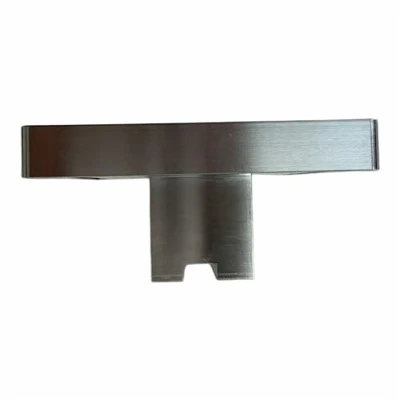
First, let’s start with the most obvious hostile condition: vacuum. On Earth, air molecules bump into every surface of an object dozens of times per second, transferring heat evenly, creating friction, and acting as a buffer between moving parts. In space, there’s essentially no molecules, so heat can’t dissipate the way it does here. That’s a big problem, because even the most efficient electronics produce small amounts of heat that, if trapped, can fry a circuit board or warp a structural component in hours. Our solution? Heat exchangers. These aren’t your average car radiator parts—they’re precision-machined from high-purity aluminum or titanium, with micro-channels carved into their surfaces that work with the satellite’s thermal control system. When a satellite’s central computer runs a process, waste heat travels through the electronics’ casing into the heat exchanger, which then radiates it out into space as infrared energy. We test every heat exchanger we make in a vacuum chamber that simulates the temperature swings of low Earth orbit (LEO) and deep space—up to 250 degrees Fahrenheit during sunlit passes, and minus 250 in shadow—to make sure they don’t warp or stop radiating when it matters.
Another quirk of vacuum is outgassing. On Earth, materials hold onto small amounts of moisture, solvents, and trapped gases that get released when pressure drops. If a component outgasses on a satellite, those gases can condense on a lens, a solar panel’s photovoltaic cells, or a sensor, blocking their function. For example, a thin layer of condensation on a star tracker—used to orient satellites in space—could make it impossible to lock onto a reference star, turning a $500 million satellite into an expensive paperweight. That’s why all the polymers, adhesives, and even lubricants we use in our components are strictly selected to meet NASA’s low-outgassing standards, like the ASTM E595 test. We bake all non-metallic parts in a vacuum oven before assembly to drive out any residual gases, so when our parts reach space, there’s nothing left to condense where it shouldn’t.
Next, radiation. Earth’s magnetic field shields us from most of the sun’s high-energy protons and cosmic rays, but in space, those particles bombard every exposed surface of a satellite. A single high-energy proton can flip a bit in a computer’s memory, corrupting data or even crashing an entire mission. For a component like a microcontroller—one of the most common parts we supply—this means standard consumer-grade chips are useless. We use radiation-hardened (rad-hard) components, which are manufactured with modified circuitry and materials that can absorb or deflect those particle strikes. For structural components, like the brackets that hold a satellite’s solar arrays in place, we add a thin layer of aluminum or tantalum coating to block low-energy radiation. We also subject every rad-hard component to radiation testing in our partner labs, blasting them with protons and neutrons to make sure they still function after 1,000 or more strikes—something that would kill a regular chip after a single hit.
Then there’s launch and orbital vibration, which most people never think about when a satellite is floating peacefully in space. When a rocket launches, it generates vibrations up to 10,000 Hz, plus shock waves at ignition and stage separation that are enough to shake a component loose if it’s not properly secured. Our structural components—like bolted joints, mounting brackets, and harness clamps—are designed to withstand these forces through finite element analysis (FEA) modeling, plus physical vibration testing on our in-house shaker table. We use custom fasteners with locking mechanisms, like captive nuts and thread-locking adhesives rated for space, to make sure nothing comes loose during launch. For example, the connector housings we supply for satellite wiring are not your standard USB cables—they’re sealed with gaskets that can handle the 100 Gs of acceleration during launch, and their metal pins are coated with gold for conductivity, so they don’t break under vibration.
Once a component is in space, it also has to operate in extreme temperature extremes, which we touched on with heat exchangers, but that applies to every part. For a temperature sensor, for example, the difference between room temperature on Earth and minus 200 degrees Fahrenheit in deep space would throw off its readings by hundreds of degrees if it wasn’t calibrated. We calibrate all our temperature components across a range from minus 400 to 350 degrees Fahrenheit, using environmental chambers that simulate space temperatures, so they give accurate readings no matter where a satellite is orbiting. For moving parts, like the hinges on a satellite’s solar arrays, we use solid lubricants, like molybdenum disulfide coatings, instead of oil or grease, which would evaporate in vacuum. These coatings create a slippery surface between metal parts, so the hinge can open and close smoothly even after 10,000 cycles, which is what a 10-year mission might require.
Let’s talk about one of the most critical components we make: the attitude control system (ACS) thruster valve. Satellites need these small valves to fire tiny amounts of fuel to adjust their orbit, point their sensors, or avoid space debris. How does a thruster valve work in space? Unlike a car engine, which uses atmospheric oxygen to burn fuel, these thrusters carry their own oxidizer (usually hydrazine or a green fuel like monopropellant) in a sealed tank. The valve opens when an electrical signal from the satellite’s computer triggers a piezoelectric actuator, which pushes a small pin to let fuel flow through a nozzle. In space, there’s no gravity, so the fuel has to be pulled toward the nozzle using a device called a propellant management device (PMD), usually a mesh screen or a bellows, to prevent fuel from floating away and leaving the valve dry. We test every thruster valve in a zero-gravity simulator (we use a drop tower that creates 2.2 seconds of weightlessness) to make sure the fuel flows correctly, so the valve doesn’t fail when it’s time to make a critical orbit adjustment.
Another part that people don’t often appreciate is the solar array connector. Solar panels are the lifeblood of most satellites, converting sunlight into electricity to power all their systems. The connectors that link the solar panels to the satellite’s power distribution unit have to handle millions of volts (for high-voltage solar arrays) and hundreds of amps, all while exposed to UV radiation and temperature swings. On Earth, a bad connector might just cause a lamp to flicker; in space, a bad connector means a dead satellite. Our connectors are built with two metal shells—one for the positive current, one for the negative—sealed with an hermetic glass-to-metal bond that prevents vacuum from getting into the connector, plus gold plating on the pins to resist corrosion from space radiation. We also test them for vibration, shock, and temperature cycling to make sure they can connect and stay connected for the entire mission.
Now, you might be wondering: why does this matter to you? Whether you’re a satellite operator building a LEO constellation, a space exploration company working on a lunar lander, or a defense contractor building a spacecraft for national security, every single component in your system is a piece of the puzzle. If one fails, the entire mission is at risk. That’s why we don’t just sell parts—we partner with our customers to design components that meet their specific mission needs, from small CubeSats to large deep-space probes. We work with you during the design phase, testing materials and prototypes to make sure they’ll survive launch, vacuum, radiation, and 5, 10, even 15 years in space.

If you’re ready to discuss your aerospace component needs, from structural brackets and heat exchangers to rad-hard connectors and thruster valves, don’t hesitate to reach out. Our team has decades of experience working on missions of all sizes, and we’re committed to delivering components that are tested, reliable, and built to perform in the harsh environment of space. Let’s work together to make sure your next mission is a success.
Mechanical Parts References
NASA. (2020). Handbook of Materials for Space Applications. National Aeronautics and Space Administration.
ASTM International. (2021). Standard Test Method for Total Mass Loss and Collected Volatile Condensable Materials from Outgassing in Space Environment (ASTM E595). ASTM International.
European Space Agency. (2019). Radiation Hardening Guidelines for Spaceborne Electronics. European Space Agency.
Society of Automotive Engineers. (2022). Aerospace Standard for Vibration Testing of Space Components (AS9100 Rev. D). Society of Automotive Engineers.
Dongguan Yixin Metal Products Co., Ltd.
With abundant experience, we are one of the most professional aerospace components manufacturers and suppliers in China. Please rest assured to wholesale advanced aerospace components made in China here from our factory. Good service and quality products are available.
Address: No.172, Daxing Road, Yangwu, Zhen, Dongguan City, Guangdong Province, China
E-mail: Chengxingfeng123@163.com
WebSite: https://www.zgdgyixin.com/
