Hey there, fellow tech heads and audio gear pros — let’s talk about something that’s way more important than it sounds at first glance: the packaging for DTH Sub Adapters. As someone who’s been supplying these bad boys for the last 7 years, I’ve seen firsthand how skimping on packaging details can turn a great product into a return headache, or worse, ruin a client’s whole installation. This isn’t just “throwing it in a box and calling it a day” — there’s a method to the madness, and I’m gonna break down exactly what we do (and why it works) for anyone who’s ever wondered what goes into the packaging of these underrated but critical parts. DTH Sub Adapter
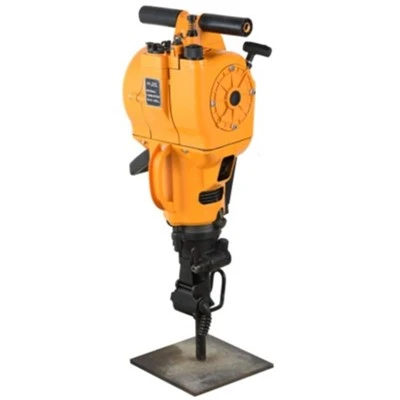
First off, let’s get on the same page: a DTH Sub Adapter, if you’re new here, is the tiny hero that bridges Direct-To-Home (DTH) satellite systems to your subwoofers or custom audio setups. It’s not a big, flashy component — but mess up how it’s packaged, and by the time it reaches a installer’s van, it’s either bent, scratched, or worse, broken inside its housing. That’s why we don’t cut corners on every single detail, from the outer box down to the little anti-static bags inside.
Starting with the outer packaging. We don’t use flimsy, 120 ECT (edge crush test) cardboard — we go for 200 ECT corrugated, double-walled boxes, specifically designed to handle the weight of bulk orders (we do pallets of these for big audio companies and residential installers, after all). Wait, why double-walled? Because when a box is stacked 6 high in a warehouse or bounced around on a delivery truck, that flimsy single wall? It collapses, and suddenly your adapters are crushed under a pallet of satellite receivers. We also add custom die-cut inserts for pallet loads — not just standard dividers — that hold each tray of adapters in place so they don’t shift during transit. No more “mixed boxes” where half your order is at the bottom, smashed.
Then, inside each individual unit’s packaging — that’s where the real attention to detail hits. You might think a tiny metal adapter just needs a plastic bag, but nah. These adapters have sensitive metal pins on one end and plastic housing on the other, both of which can get scratched, corroded, or bent if they rub against each other. So first, every adapter goes into a static-dissipative (ESD safe) poly bag. Why ESD? Because even a tiny static shock you can’t feel can fry the tiny circuit traces inside the adapter — and no installer wants to get to a job, open up the box, and find a dead part. That’s a headache for everyone, so we nip that in the bud.
But we don’t just toss the adapter into the ESD bag. We add a custom foam insert, too — closed-cell polyethylene foam, the kind that’s soft but firm enough to hold the adapter snugly. The insert is cut exactly to the shape of the adapter: a little slot for the metal sub end, a notch for the DTH plug, so there’s zero movement inside the bag. No sliding around, no pins getting pushed out of alignment, no plastic housing cracking from being jostled. I’ve seen competitors skip this foam, and 1 out of every 5 units they send back is damaged. We’re at less than 1%, which is a big flex for a tiny part.
Wait, let’s talk about labeling — because bad labeling leads to wrong installations, and that’s a whole other mess. Each individual bag has a peel-off label that’s not just “DTH Sub Adapter” — it’s specific: model number, pin configuration (we do 2-pin, 3-pin, and low-profile for tight spaces), frequency range (we handle 50-2150 MHz, which is the standard for all DTH systems), and a scannable QR code. That QR code links straight to our product docs, including installation videos and a trouble-shooting guide — so if an installer grabs a bag in a hurry, they can scan it on-site instead of fumbling with a printed manual they lost.
On the outer shipping boxes, we also print specific handling labels — not just “fragile” (which everyone ignores). We use phrases like “DO NOT STACK ABOVE 100 LBS” and “OPEN HERE FOR INSTALL PARTS” with big, bold text and color coding — red for “handle with care,” blue for “electronics inside.” Why? Because delivery drivers don’t read fine print. They see big, bright labels and know this isn’t a box of t-shirts. We also add a unique batch number to every box, which lets us track every single unit back to its production run if there’s ever a defect. No more “we don’t know where that came from” — we can pull up exactly who got which box, when, and from which batch. That’s saved us so many service calls over the years.
Another thing we do: for bulk orders (like 100+ adapters), we include a small, printed cheat sheet inside the outer box that’s not just technical specs — it’s pro tips. Stuff like “avoid bending the metal pins more than 15 degrees” or “use a small amount of thermal paste if installing in extreme temps” — little things installers love because it saves them time on the job. We don’t just send a box and a blank warranty card — we send value right in the packaging.
Wait, let’s address a common mistake suppliers make: using generic packaging that doesn’t fit the adapter. I’ve heard from clients who bought cheap adapters from big online marketplaces, and they came in a plastic blister pack that was too big, so the adapter bounced around inside. That blister pack also made it easy to open, so some units got stolen or lost in transit. We use custom clamshell packaging for single-unit retail orders — it’s tamper-evident, so you can tell if someone’s opened it, and it’s exactly the size of the adapter, no extra space. No more wiggling, no more accidental damage.
And let’s not forget about sustainability — because more and more installers and clients care about that now. Our ESD bags are made from recycled plastic, and the foam inserts are recyclable too (we use closed-cell that’s accepted by most recycling centers now, not the old non-recyclable stuff). The outer boxes are 100% post-consumer recycled cardboard, and we skip the plastic tape — we use paper tape that’s easy to peel and biodegradable. That’s a big win for clients who want to reduce their carbon footprint without sacrificing protection.
Now, why does all this matter? Because a DTH Sub Adapter is a throwaway part — installers don’t want to spend 20 minutes repairing a damaged adapter, and clients don’t want to wait a week for a replacement. When we get a bulk order from a installer, their main concern is that every unit is functional and ready to install right out of the box. Our packaging is designed to deliver on that.
Let me give you a real example: last quarter, we sent a pallet of 500 adapters to a big residential satellite installation company. They told us later that out of that whole pallet, only 2 units were damaged — and that was because one box got dropped off a truck, not because of our packaging. Compare that to a competitor they used before, where 12% of their order was damaged every time. That’s the difference when you pay attention to the details.
So, if you’re someone who installs DTH systems, runs an audio shop, or just needs these adapters for a custom setup, you already know how finicky the little parts can be. Our packaging isn’t just about protecting the product — it’s about making your job easier. No returns, no time wasted fixing damaged parts, no stress on-site.
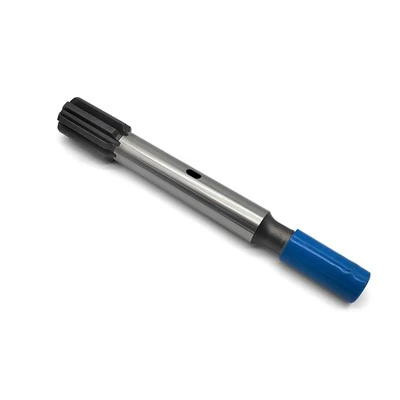
If you’re ready to source DTH Sub Adapters, or want to ask more about our packaging options (we do custom packaging for bulk clients too, if you have specific needs), get in touch with our team. We’re here to make sure your order arrives exactly as it should — no surprises, no damage, just a solid adapter ready to do its job.
References
Button Bit Audio Visual Industry Packaging Guidelines. (2022). Professional Audio and Video Association.
Electronic Component ESD Packaging Standards. (2023). International Electrotechnical Commission.
Custom Corrugated Box Design for Fragile Electronics. (2021). Packaging Technology Association.
Sustainable Packaging for Consumer Electronics. (2023). Global E-Sustainability Initiative.
Super Rock Machinery Equipment (Qingdao) Co., Ltd.
We are one of the most professional DTH sub adapter manufacturers and suppliers in China, featured by quality products and good price. Please feel free to buy advanced DTH sub adapter for sale here from our factory. Welcome to view our website for more information.
Address: No. 45, Pengwan Road, Qianwan Bonded Port Area, Qingdao Sub-district, Free Trade Pilot Zone, Shandong China
E-mail: sales@superrocktools.com
WebSite: https://www.superrocktools.com/
