As a supplier who’s spent the last decade walking alongside industrial operators to install, calibrate, and troubleshoot level meters, I’ve lost count of how many times people treat these critical devices as “set-it-and-forget-it” tools. I’ve seen a 10,000-gallon storage tank overflow because a technician skipped a monthly sensor check, and another food processing plant shut down for 72 hours because a level meter’s coating wore away and triggered a corrosion fault. Level meters don’t require constant, fancy maintenance—but cutting corners on their care is like ignoring a car’s oil change: it leads to expensive, avoidable breakdowns. In this post, I’ll break down the non-negotiable maintenance steps for the most common types of level meters, share real-world lessons I’ve learned on our service calls, and explain why skipping even one step can cost you more than the meter itself. Level Meter
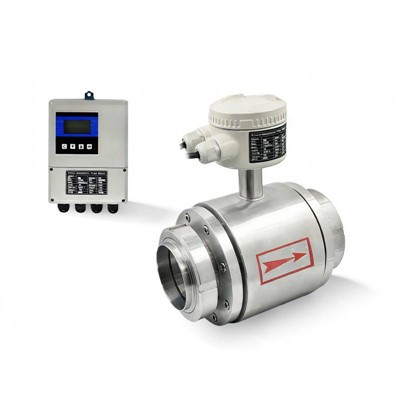
First, let’s ground this: level meters aren’t one-size-fits-all. The maintenance needs of a ultrasonic level meter, installed on a open-air water storage tank, are totally different from a guided wave radar level meter tucked inside a pressurized chemical reactor, or a capacitance probe monitoring abrasive slurry in a mining hopper. That said, there are core maintenance pillars apply to all units, regardless of technology, plus technology-specific tweaks I’ve picked up from hundreds of client installations.
Let’s start with daily checks—these are the ones operators can do in 5 minutes, no specialized training required. I always tell new clients to assign a frontline operator to a quick daily walkaround, because small, obvious issues are the first sign of a bigger problem. For example:
- For ultrasonic meters, check if the sensor face has dirt, spider webs, or moisture buildup. I once had a customer whose ultrasonic meter read 2 feet low for three weeks before they noticed a spider had built a web directly in front of the sensor’s beam. That web absorbed the sound waves, so the meter couldn’t calculate the distance to the liquid surface. A quick wipe with a soft cloth fixed it, and we now include a daily “sensor face check” in every client’s onboarding checklist.
- For radar meters (which are more resistant to environmental gunk, but not immune), check the antenna for water spots or dust. In dusty grain elevators, even a thin layer of grain dust can distort the radar signal over time. One grain processing plant I work with now has operators do a 10-second brush of the antenna each shift to prevent that.
- For contact meters, like capacitance probes or guided wave radar, check for material buildup on the probe. This is trickier to spot from a distance, so I suggest operators log a quick visual check if they can access the top of the tank. A thick layer of resin on a capacitance probe will throw off its measurement by 10% or more—enough to trigger false low-alarms during a production run.
Then there’s monthly maintenance, the step I see most operators overlook. Daily checks catch immediate issues, but monthly checks dig into the hidden stuff that creeps up over time. Let’s break this down by technology, since that’s where confusion happens:
- Non-contact level meters (ultrasonic, pulsed radar, FMCW radar):
The big monthly task here is signal strength verification. Most modern level meters have a built-in diagnostic screen that shows “echo level” or “signal to noise ratio (SNR)”—aim for an SNR of at least 20 dB. If it drops below that, it’s a warning that something is interfering with the signal. That could be a new batch of foam on the liquid surface (common in beer brewing or wastewater treatment) that absorbs sound/radar waves, or a shifting tank wall that moved the sensor’s alignment. I had a brewing client last year whose FMCW radar meter started having intermittent readings; when we checked, the SNR was 12 dB, and we found a layer of foam that had thickened to 18 inches—thicker than the radar’s beam could penetrate. Adding a foam deflector solved the issue, but we caught it only because the operator did a monthly signal check.
Another monthly task for these meters: inspect the mounting bracket. Vibration from pumps or nearby machinery can loosen the bracket over time, which tilts the sensor and throws off the beam direction. In a paper mill, where there are constant vibrations from pulpers and conveyors, I recommend checking the bracket bolts every month—one mill had a meter come loose and fall into a pulp tank, costing $12,000 in replacement and downtime. - Contact level meters (guided wave radar, capacitance, load cell-based):
Contact meters are more stable, but they’re prone to material buildup and corrosion. For guided wave radar probes, monthly tasks include checking for coating buildup and verifying the probe’s integrity. A common issue is “adhesion layer”: when sticky materials like syrup or glue coat the probe, it changes the capacitance (for capacitance probes) or the signal propagation (for guided wave radar). If the coating is too thick, the meter will think the probe is shorter than it is, leading to false high-level readings. We have a client that handles chocolate production; their guided wave radar probe would build up a ¼-inch layer of cocoa butter every two weeks, so we adjusted their maintenance to a monthly wipe with a food-grade solvent, which fixed their 5% measurement error.
For capacitance probes, another monthly check: the ground connection. Capacitance meters rely on a stable ground reference, so a loose ground wire (from rust or vibration) can cause random, unreadable readings. I’ve seen this in mining operations, where moisture and corrosive slurry eat away at ground terminals—operators think the meter is broken, but it’s just a bad ground connection that takes 5 minutes to fix. - Pressure-based level meters (differential pressure, hydrostatic):
These are the workhorses for large storage tanks, but their maintenance is often neglected because they’re “out of sight, out of mind.” The monthly task here is checking the impulse lines—the small tubes that carry pressure from the tank to the sensor. Impulse lines can clog with sediment, crystallize with liquid, or get blocked by foam, leading to incorrect pressure readings. In a fertilizer storage tank, the impulse line for a hydrostatic meter clogged with salt crystals, so the meter read empty even though the tank was 50% full. The operator didn’t notice for two months, leading to a $20,000 over-order of fertilizer. We now offer a service that flushes impulse lines quarterly, but the best practice is to visually check the lines every month to make sure they’re clear.
Now, quarterly maintenance—this is the deep dive that prevents long-term failures. Quarterly maintenance is where we go beyond visual checks and do formal calibrations, component inspections, and performance tests. Let’s be clear: calibration isn’t a one-time thing when you install the meter. Regulatory bodies (like the EPA for wastewater, or food safety agencies for food production) require periodic calibration, and even if there’s no regulation, calibrating a level meter every 3-6 months ensures accuracy.
For ultrasonic and radar meters, calibration is straightforward: most can be calibrated “in-situ” (without removing the meter) by entering a known tank level into the device’s settings and verifying that the reading matches. For contact meters, you might need to do a physical dip test (using a manual tape measure) to confirm the meter’s reading is accurate. I always tell clients to do a dip test during a low tank level (when the tank is empty or almost empty) and a high tank level (when it’s full) to test both ends of the measurement range. If the reading is off by more than 1% of the tank’s total capacity, it’s time to adjust the calibration.
Another quarterly task: inspecting power and communication connections. Most level meters are connected to PLC systems or SCADA, so loose wiring or faulty communication modules can cause the meter to stop sending data. In a chemical plant, a faulty communication module on a radar meter caused the control system to think the tank was empty, leading to a shutdown. We recommend tightening all terminal connections and testing the communication link with a multimeter every quarter.
For meters in harsh environments (high dust, high temperature, corrosive gases), quarterly maintenance also includes checking the sensor’s enclosure seal. Dust and moisture can get into the enclosure over time, damaging internal components. I had a client in a cement plant where a rubber seal on their ultrasonic meter cracked, allowing cement dust into the sensor circuit board—replacing the circuit board cost $1,500, and downtime was 3 days. A quarterly seal check would have caught the crack early.
Now, emergency maintenance: what to do if your level meter fails, and how to prevent that from happening. Even with perfect maintenance, meters can fail unexpectedly. The first step is to have a backup plan—most facilities should have a manual dip tape or a portable level meter on hand for emergencies. But if your meter does fail, here’s what I’ve learned from hundreds of service calls:
- Don’t tamper with the sensor unless you’re trained. I once had an operator who tried to “fix” a malfunctioning radar meter by tapping the antenna with a wrench, which bent the antenna and ruined the signal for good. Tapping can loosen connections, but it can also damage sensitive internal components.
- Check the basics first. 80% of level meter failures are caused by something simple: a dead battery (for battery-powered meters), a loose power cable, or a dirty sensor face. Before calling a technician, check these three things first.
- Have a service contact ready. As a level meter supplier, I tell all clients to have a local service technician on call, but it’s also good to know your meter’s warranty and service options. Some manufacturers offer remote diagnostics, which can save you hours of downtime by identifying the issue over the phone.
Now, let’s talk about common misconceptions I hear all the time, because these are the things that lead to skipped maintenance:
- “Level meters are too small to cost much.” Wrong. A single hour of downtime in a chemical plant can cost $100,000 or more, and a level meter failure is a top cause of unplanned shutdowns. I’ve seen small, 2-inch level meters cause $500,000 in losses over a weekend.
- “I calibrate the meter once a year, that’s enough.” For most industrial applications, especially those with abrasive or sticky materials, every 6 months is the minimum. If your process has changing conditions (like a new batch of material that’s thicker or more corrosive), you might need to calibrate even more often.
- “I don’t need to check the impulse lines, they’re sealed.” Impulse lines aren’t completely sealed. Over time, sediment can build up, or temperature changes can cause condensation inside the lines, which blocks the pressure reading. I’ve seen impulse lines on hydrostatic meters clog with wax in an oil refinery, leading to a false high-level reading that caused an unnecessary shutdown.
At the end of the day, maintaining a level meter isn’t about following a rigid checklist—it’s about being consistent with small, regular checks. The 5-minute daily sensor wipe, the 10-minute monthly signal check, the hour-long quarterly calibration: these small steps add up to avoid the big, expensive failures that shut down operations. As a supplier, I’ve seen firsthand that clients who stick to a maintenance schedule have 90% less level meter-related downtime than those who treat the meter as a set-it-and-forget-it device.
If you’re looking to optimize your level meter maintenance, or if you need support calibrating, repairing, or upgrading your current meters, we’re here to help. Reach out to our team to discuss your specific setup and create a tailored maintenance plan that fits your operation’s needs.
Pressure & Temperature Transmitter References
- Level Measurement Handbook and Encyclopedia, 10th Edition. Automation.com, 2022.
- Industrial Level Meter Maintenance Best Practices. International Society of Automation (ISA), 2021.
- "Common Causes of Level Meter Failures in Industrial Applications." Journal of Process Control, vol. 32, 2019, pp. 45-52.
- Food and Drug Administration (FDA) Guidelines for Process Measurement Equipment Maintenance. 2020.
- "Impulse Line Maintenance for Hydrostatic Level Meters." Chemical Processing Magazine, vol. 84, no. 6, 2021, pp. 38-42.
Dalian Yheng Technology Co., Ltd.
Dalian Yheng Technology Co., Ltd. is one of the leading level meter manufacturers and suppliers in China, also supports customized service. We warmly welcome you to buy high quality level meter in stock here from our factory. Contact us for more details.
Address: F1605, NO.10 Huoju road, High-tech Industrial Zone, Dalian, China
E-mail: admin@dlyheng.com
WebSite: https://www.yhengphmeter.com/
