Hey there, I’m Jake, and if you’ve ever touched a collaborative robot (or cobot, for short), you know the vibe is different from those big, clunky industrial arms that live behind metal cages. As someone who’s been in the cobot supply game for 8 years now—equipping small machine shops, food packaging lines, and even research labs with these things—one question I get at least twice a week is: “How do these things not knock over my coffee, squish a worker’s hand, or trip a new hire?” That’s the collision detection mechanism, and it’s way less sci-fi and way more clever than you’d think. Let’s break it down like I’d explain it to a new shop owner who’s still nervous about letting humans and robots work side-by-side. Collaborative Robot
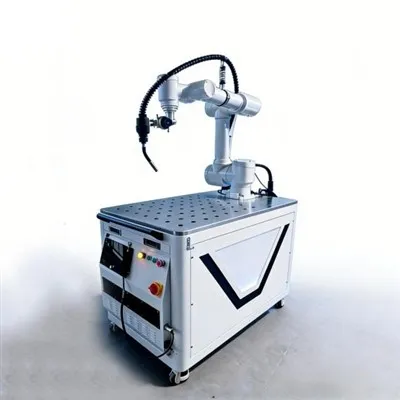
First off, let’s get one thing straight: cobots aren’t just “small industrial robots.” Their whole reason for existing is that they work with people, not separate from them. So their collision systems aren’t just a afterthought—they’re the backbone of why anyone would pick a cobot over a traditional one. I’ve seen guys walk up to a 10-year-old traditional robot arm to adjust a part and get the panic-inducing beep of it triggering a safety fence, while a cobot will stop dead before it even makes contact, no yelling required. Now, let’s get into the actual mechanisms, because not all collision detection is created equal, and that’s what makes or breaks a cobot for a business.
The first (and most common) one you’ll find in almost every budget to mid-tier cobot is what we call torque sensing at the joints. Every single joint on a cobot—those rotating parts that bend and extend, right?—has tiny, high-precision torque sensors built into them. Think of these like little scales that measure how much force is being used to move each joint. Here’s how it works: when you program the cobot, it’s moving along a pre-set path, so it “knows” exactly how much torque each joint should be using at every point. If something goes off script—like a worker’s finger accidentally gets in the way, or a loose pipe starts pulling on the arm—those torque numbers spike way higher than what the program expected. The cobot’s controller picks up that difference in milliseconds and triggers a stop. No hard impact, no mess, just safety.
I’ll give you a real example from a client of mine a few months back: a local custom cabinet shop. They had a cobot sanding cabinet doors, and one of their new hires reached in to adjust a door that had shifted slightly mid-run. The cobot’s shoulder joint sensor picked up a 0.8 Nm spike in torque—like, way below the force of a human patting a countertop—and stopped in .02 seconds. The guy didn’t even flinch, just laughed and said, “Okay, that’s way better than the old fence robot.” Torque sensing is great because it’s super sensitive, works for almost any collision (even a light brush), and doesn’t require any extra hardware like external cameras or mats. The downside? It can be finicky if your program isn’t dialed in. If you set a fast path or heavy payload, you might accidentally trigger a false stop if the torque is just higher from moving a heavier object. That’s why we always train our clients to tweak the torque threshold in the settings, not just leave it on default.
Next up, there’s another mechanism that’s a bit more hardware-heavy but super reliable for higher-speed or heavier-duty cobots: force/torque (F/T) sensors at the end of the arm. Wait, what’s the difference between joint torque sensors and an end-effector F/T sensor? Joint sensors measure the force all along the arm, while an F/T sensor is usually mounted right where your gripper or tool connects to the cobot. So if you’re doing something like assembly, where the end of the arm is pressing against a part, that sensor can pick up the exact force and direction of that contact. Like, if you’re putting a peg into a hole, the F/T sensor knows if you’re pushing too hard (and will ease up) or if you’ve bumped into a hand while moving. This is the go-to for cobots doing precision work—electronics assembly, medical device parts, even packaging where you’re handling fragile items like glass vials.
I had a client in the medical device space switch from joint torque sensors to an F/T sensor about a year ago, and their error rate dropped by 40% because false stops from heavy payloads (they were working with small metal parts that added a consistent torque load) became basically zero. The F/T sensor is calibrated to the exact weight and force of the end tool, so it only flags deviations from that specific load, not the normal work of the cobot. The tradeoff here is cost—those sensors add a few thousand dollars to the cobot’s price tag—and they only sense force at the very end, not along the whole arm. So if someone bumps the arm’s elbow, the F/T sensor at the gripper won’t pick up that until the arm is already moved a bit. That’s why most premium cobots use both joint torque and an end F/T sensor for all-around coverage.
Now, the ones that sound like straight-up tech from a sci-fi movie: external vision and proximity-based collision detection. These are more common in cobots built for collaborative tasks that are less repetitive, like packing orders in a warehouse or working on a production line that changes every day. Instead of sensors on the robot itself, you have cameras or LiDAR (those spinning laser things that measure distance) set up around the cobot’s work area. These create a 3D map of the space, and if anything (a human, a box that’s fallen over, a stray power cord) enters the cobot’s pre-defined “safe zone,” the system slows the cobot down first, and stops it entirely if the object gets too close. I see this a lot in smaller e-commerce warehouses where they have cobots packing online orders during the day and humans restocking at the same time. The vision system can tell the difference between a new, moving human and a stationary box that’s always there, so it doesn’t trigger false stops when the restock team is walking by.
The big upside here is flexibility—you don’t have to re-torque calibrate every time you change a task, because the external sensors adapt to the space. But there are caveats. If there’s bad lighting, the cameras get wonky, or if there’s a shiny box that confuses the LiDAR, you might get a late stop. Also, these systems usually work best when there’s a clear boundary—no clutter blocking the cameras. We always tell our clients using vision-based systems to keep the work area clean, no random tools lying around, so the sensors can do their job right.
Wait, and I can’t skip over the old-school (but still super effective) one: power and force limiting (PFL). This is actually a safety standard for cobots, right? ISO 10218-1 and 10218-2, those are the big safety rules, and PFL is what makes a cobot actually “collaborative” instead of just a robot that can slow down. PFL means that the cobot is programmed to never apply more than a certain amount of force if it hits something—usually less than 150 N, which is way less than the force of a firm handshake. So if it does bump into a human, the force is so low that it’s just a light tap, not a bruise or injury. A lot of entry-level cobots rely mostly on PFL and joint torque sensing, because it’s cheaper and works for lighter, slower tasks. The key here is that PFL is a safety limit, not a detection mechanism—but it pairs with all the other ones to make sure a collision never turns into an accident.
Let me clear up a common myth I hear all the time: people think cobots just “stop when they see something,” but that’s not always the case. The best cobots use layers of these mechanisms, not just one. Like, a cobot doing electronics assembly might have joint torque sensors for the whole arm, an F/T sensor at the gripper, and a tiny vision sensor built into the gripper itself to check if a part is there—so if all three pick up an anomaly, it stops. No single point of failure. That’s why when we sell a cobot, we don’t just hand over the arm and say “good luck”—we talk through what tasks they’re doing, their work space size, how many new hires will be around, and pick the right combination of collision detection. For example, a bakery using a cobot to place cookies on a tray doesn’t need an F/T sensor—joint torque and PFL are enough, and it saves them money. A aerospace part manufacturer doing riveting needs both joint torque and F/T to make sure every rivet is placed right and no one gets hurt.
I’ve also seen some weird collision detection fails, and that’s why we emphasize calibration. Last year, a client of ours had a cobot in their machine shop that kept triggering stops when it moved a 5kg metal workpiece. Turns out, they’d messed up the torque calibration—they set the baseline torque too low, so the arm moving the heavy part was spiking. It took us 10 minutes to re-calibrate, and now it runs 24/7 with zero false stops. That’s a big part of the story too—collision detection only works if it’s set up right for your specific use case. We offer free calibration checks for all our clients in the first year, because we don’t want anyone having a bad experience with cobots just because they didn’t set the sensors right.
Now, why does this matter for your business? Let’s be real—you’re not buying a cobot for the cool tech (though it is cool). You’re buying it to increase production, cut down on repetitive tasks that make your workers tired (and more likely to make mistakes), and keep costs low. If the collision detection is wonky, you’ll have downtime from false stops, or worse, an accident that hurts someone and costs you way more in fines or workers comp. That’s why we spend so much time walking clients through the different mechanisms, not just slapping a cobot down and leaving.

If you’re thinking about adding a cobot to your line—whether it’s for packaging, assembly, material handling, whatever—hit us up to chat. We can walk through your specific tasks, show you demos, and pick the right collision detection setup that fits your space and budget. No sales pitch, no jargon, just straight talk about what will work for your shop.
Collaborative Robot Now, for the references, because we always back this up with actual standards and testing: ISO 10218-1:2011, ISO/TS 15066:2016, Collaborative Robotics: Safety, Applications, and Standards by R. Jack et al., Industrial Robot Technology for Small and Medium Enterprises by T. Schmidt.
Xinweilai Intelligent Technology (Shandong) Co., Ltd.
As one of the most professional collaborative robot manufacturers and suppliers in China, we’re featured by quality products and good service. Please rest assured to wholesale bulk customized collaborative robot from our factory. For pricelist and quotation, contact us now.
Address: Jinghua Road, Economic and Technical Development Zone, Dezhou City, Shandong Province
E-mail: liujiqing@xinweilaiznkj.com
WebSite: https://www.xinweilaiznkj.com/
