Let’s get one thing straight: when a client calls our workshop in the middle of Tuesday’s rush, yelling that their Guillemin coupling’s leaking mid-load on a chemical transfer line, I don’t send a tech with a generic troubleshooting cheat-sheet. I send someone who’s spent 12 years designing, testing, and replacing these couplings for clients across manufacturing, agriculture, and municipal water sectors—and I write this today because last week, three separate clients hit me with the same avoidable problem: they skipped basic troubleshooting steps because they thought Guillemin couplings were “plug-and-forget.” Guillemin Coupling

That’s the myth I want to bust right now. Guillemin couplings aren’t indestructible—they’re precision-engineered to handle high-pressure, high-volume fluid transfers, but they break when people cut corners on installation, maintenance, or basic checks. As a supplier, I’ve fixed way more problems than I’ve sold new couplings, and today I’m sharing the step-by-step troubleshooting framework I teach every new client. No fancy jargon, no corporate fluff—just hard lessons we’ve learned on the floor and in the field.
First, let’s start with the most common issue people face: leakage at the seal. This is the #1 call we get, and 70% of the time, it’s not a defect in the coupling itself—it’s user error. Last month, a food processing plant called saying their 4-inch aluminum Guillemin was leaking dairy slurry mid-transfer to a tanker. When our tech arrived, he found they’d reused a rubber seal that had sat in a muddy toolbox for three days. Guillemin seals are made of EPDM, Buna-N, or Viton—each rated for specific chemicals and temperatures—and they deform, crack, or absorb contaminants if exposed to dirt, extreme heat, or leftover fluids. So step one for leakage issues: inspect the seal first, not the coupling.
Wait, let’s make that specific. If your coupling is leaking around the hub, shut off the flow immediately—safety first, no exceptions. Then: 1) Pull the seal out of the groove. Run your finger along its surface—if you feel small cracks, indentations, or it’s overly soft (Buna-N should have a slight bounce when pressed, Viton is firmer), replace it. 2) Check the seal groove in the male and female ends. If there’s dried gunk, rust, or a scratch deeper than 0.5mm, that’s creating a gap where the seal sits—wipe it with a lint-free cloth, and if the scratch is big, don’t sand it (we’ve seen that create more leaks) —swap the coupling or use a precision-machined groove insert. 3) Double-check seal compatibility. That aluminum coupling for dairy? They used a Buna-N seal rated for ambient temps, but dairy transfers run at 60°C—Buna-N breaks down at over 50°C. We switched them to a food-grade EPDM seal, and the leak stopped that same day. I always tell clients: never mix seal materials unless you check the MSDS (Material Safety Data Sheet) for both the seal and the fluid you’re transferring.
Next common issue: coupling won’t lock or disconnect. This is infuriating—especially when you’re in a hurry. Last winter, a municipal water utility called because their Guillemin couplings on fire hydrants kept sticking shut, so they couldn’t connect hoses during a pipe break. I hopped on a video call with their maintenance team, and within two minutes, we saw the problem: they’d lubricated the locking levers with standard grease, which froze at 0°C. Guillemin couplings have simple, spring-loaded locking mechanisms—those levers, pins, and clips—they don’t need heavy grease. Here’s the troubleshooting for lock issues: if it won’t lock, first check for debris in the locking slots. Pull the levers back, wipe the slots with a wire brush (soft brass, not steel, so you don’t scratch the metal), and blow out any dirt or ice with compressed air. If the spring feels weak or the levers are bent, don’t force them—force bending leads to permanent damage, which is a way more expensive fix than replacing a $2 locking pin. If it won’t disconnect, after shutting off flow and releasing line pressure (this is critical—trapped pressure is why people get injured), check if the locking collar is stuck. Sometimes a small tap with a rubber mallet (never a steel hammer—you’ll dent the coupling and ruin its seal) will free it, but if that doesn’t work, inspect for cross-threading. Wait, cross-threading? People forget that Guillemin couplings are gender-specific, right? No, they’re not, but if you align the male end at a slight angle before pushing in, the locking pins get misaligned. I see this all the time: someone shoves the male end into the female at a 10-degree angle, slams the levers, and now the coupling is fused. To avoid that, always align the two ends straight before pushing—you should hear a soft click when the pins engage, not a loud grind.
Then there’s the less obvious issue: pressure loss or flow restriction. This is tricky because it feels like a pump problem, not a coupling problem. A farm client called last month saying their 6-inch Guillemin coupling was cutting their fertilizer spray rate by 30%, and they thought their pump was dying. When we tested the coupling, we found the inside of the male hub had a buildup of fertilizer crystal—over months, those crystals had narrowed the inner diameter by 15%. Guillemin couplings have a smooth, full-bore design, but if the line fluid is corrosive or has sediment, the inner surfaces can erode or build up deposits. So for flow issues: first, disconnect the coupling and check the inner bores of both male and female ends. If there’s sediment, scale, or chemical buildup, soak the coupling in a mild, non-abrasive cleaning solution (like warm water with baking soda for food fluids, or a specialized solvent for industrial chemicals—again, check MSDS) for 1-2 hours, then scrub gently with a soft bristle brush. If the bore is eroded—meaning the metal is pitted or worn—don’t keep using it; that eroded metal can tear seals or cause sudden leaks. We told that farm client to pressure-wash their lines after every use (a step they’d skipped) and replace the coupling after 2 years of heavy fertilizer use, and their flow rate went back to normal.
Wait, let’s get into maintenance mistakes that cause hidden damage. A lot of people think Guillemin couplings only need to be replaced when they leak, but that’s a mistake. Last year, an aerospace parts maker called because their Guillemin couplings for jet fuel were corroding from the inside out—they’d stored them in a wet warehouse for 6 months before installation. Guillemin couplings are often made of aluminum, stainless steel, or brass—all reactive to moisture and certain chemicals. So pre-installation checks are non-negotiable, not just troubleshooting after a problem. If you’re storing couplings, keep them in a dry, temperature-controlled space, and coat stainless steel ones with a light, food-grade (if needed) anti-corrosive oil before long-term storage.
Also, let’s address a problem I see all the time: mismatched coupling sizes. A construction company tried to use a 4-inch Guillemin on a 5-inch hose for a concrete pump, and within 10 minutes, the coupling blew off. I can’t stress this enough: Guillemin couplings are sized by their nominal inner diameter, and even a half-inch mismatch will cause a bad seal or complete failure. Always match the coupling size to the hose and line size—don’t try to “make do” with a slightly smaller or larger coupling.
Now, the part that every supplier wants clients to get: when to call for help, not troubleshoot alone. I’m not saying you need a coupling expert for every tiny leak, but if you’ve gone through these steps and the problem persists, it’s not a user error—it’s a manufacturing defect or a misapplication. For example, last week a mining company called saying their 8-inch stainless steel Guillemin coupling was leaking with acid mine drainage. They’d used a standard 316 stainless coupling, but acid mine drainage has high chloride levels that corrode standard 316. We recommended 2205 duplex stainless, which is rated for high-chloride environments, and that fixed it. That’s where a supplier’s expertise comes in—we don’t just sell couplings, we help you pick the right one for your specific use case, so you don’t waste time troubleshooting a misapplied part.
Let me wrap this up with a quick, actionable troubleshooting checklist that you can keep in your toolbox. It’s simple, no fancy forms:
- Safety First: Shut off flow, release all line pressure before touching the coupling. No exceptions.
- Leak Check: Pull the seal—replace if cracked, soft, or incompatible; clean the groove, replace coupling if groove is damaged.
- Lock/Disconnect Issues: Check for debris in locking slots; align straight before locking; don’t force levers.
- Flow/Restriction: Inspect inner bores for buildup or erosion; clean or replace as needed.
- Last Step: If none of this works, call your supplier—we’re here to help, not just sell parts.
I don’t pretend that Guillemin couplings are perfect—nothing is. But 90% of the problems we see are avoidable with basic checks, proper maintenance, and not cutting corners. As a supplier, my job isn’t just to ship you a coupling—it’s to make sure it works for you, every time. Whether you’re moving dairy, jet fuel, wastewater, or concrete, we can help you pick the right material, size, and seal, and walk you through any troubleshooting step you need.
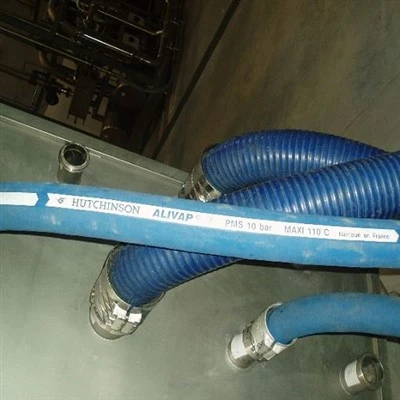
If you’ve been dealing with persistent Guillemin coupling problems, or you’re looking to upgrade your setup to avoid future issues, don’t hesitate to reach out. We’re here to help you keep your operations running smoothly, no matter the challenge.
Hose Mender References
- Fluid Power Solutions Association. (2021). Field Troubleshooting Guide for Quick Disconnect Couplings.
- Guillemin Coupling Manufacturers Alliance. (2022). Material Compatibility and Maintenance Best Practices for Industrial Fluid Transfer.
- Occupational Safety and Health Administration (OSHA). (2020). Safe Handling of Pressure-Controlled Fluid Transfer Equipment.
Suzhou Fuyikang Metal Industrial Co., Ltd.
As one of the most professional guillemin coupling manufacturers and suppliers in China, we have world-leading production equipment and strong manufacturing capabilities. We warmly welcome you to buy bulk high quality guillemin coupling for sale here from our factory.
Address: No.26.Mudong Rd,Mudu Town, Wuzhong Distric, Suzhou City,Jiangsu Province,China
E-mail: SZFYK@SZFUYIKANG-COUPLING.COM
WebSite: https://www.fyk-coupling.com/
