Three months ago, a small café owner in Brooklyn reached out to our team with a problem that’s become way too common lately. Her low-speed electric delivery car— the one she relied on to drop off lavender lattes and custom pastries to apartment buildings within three miles—wasn’t cutting it anymore. On a busy Saturday, she ran out of charge halfway through a delivery route, leaving a batch of cold croissants on her passenger seat and a handful of frustrated customers waiting for their orders. That conversation stuck with me, because it’s exactly the question we get at our company every week: Can low-speed electric delivery cars be modified for longer range? Low-speed Electric Delivery Car
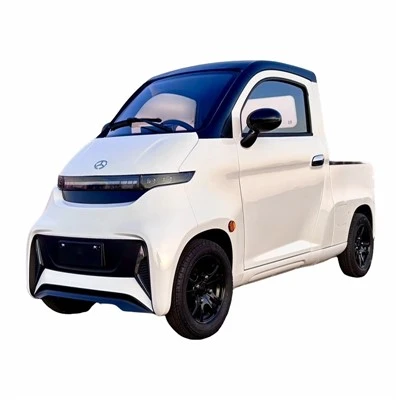
I’m Mia, part of the product and customer support team at a low-speed electric delivery car supplier, and I’ve spent the last five years talking to delivery drivers, small business owners, and last-mile logistics managers about the limits of these compact, affordable vehicles. When we first launched our LSED line, we designed them specifically for what the last-mile space actually needs: tight maneuverability in crowded downtown areas, no need for complex charging infrastructure, and a total cost of ownership that’s way lower than gas-powered vans. But we quickly learned that “low speed” doesn’t mean “one-size-fits-all range.” Some drivers only need a 25-mile loop a day, while others—like the café owner with a route that stretched to four miles per stop, three stops an hour, and 12 hours on the road—are pushing those little batteries to their absolute breaking point.
So let’s get one thing straight right up front: Yes, low-speed electric delivery cars can be modified for longer range. But it’s not a one-click fix. It depends on what kind of vehicle you have, how you use it, and what your budget is. Over the last two years, we’ve helped dozens of customers make these modifications—some small, some more involved—and we’ve learned a lot about what works, what doesn’t, and what drivers should watch out for.
First, let’s break down why low-speed electric delivery cars (LSEDs) have shorter ranges than their full-speed electric cousins, even though they look a lot like them. Most LSEDs are built with smaller, lighter battery packs to keep costs down and comply with low-speed vehicle (LSV) regulations, which limit their top speed to 25 mph in the U.S. (and similar limits in other countries). The idea is that since they’re only going to be on residential streets, bike lanes, and parking lots, they don’t need the big, heavy batteries that full-speed electric vans use. But that design makes them super versatile—perfect for small businesses like cafes, flower shops, and local grocery stores—but it also means their stock range is usually between 20 and 50 miles per charge, depending on the model. For many small operations, that’s enough. For a growing catering company, or a delivery service that covers a broader neighborhood, it’s not.
The most common modification we help customers with is upgrading the battery pack, and it’s also the one that gives the biggest range boost—without messing with the vehicle’s core design. Let’s talk about how that works. Most stock LSEDs use lead-acid batteries, which are cheap but heavy and have lower energy density. That means they store less power per pound, so a big chunk of your vehicle’s weight is just the battery itself, which takes away from the range. Swapping those out for lithium-ion batteries (specifically the lithium iron phosphate, or LFP, type, which are safer for frequent charging cycles) is a game-changer. A standard lead-acid battery for our base model LSED is 48 volts and takes up about the same space as a small cooler. An LFP battery of the same size puts out the same 48 volts, but stores 30 to 40 percent more energy. For the café owner I mentioned earlier, swapping her lead-acid battery for an LFP one bumped her range from 35 miles to 52 miles—enough to cover her entire Saturday route, with 10 miles left over for last-minute deliveries.
But wait—there’s a catch here. You can’t just cram any LFP battery into your LSED. The vehicle’s charging system and battery management system (BMS) have to be compatible. If you put a higher-capacity battery in that doesn’t match the LSED’s BMS, you could end up with overcharging, which shortens the battery’s lifespan, or even safety issues like overheating. That’s why we only offer certified battery upgrades for our own line of LSEDs, and we work with independent mechanics to certify upgrades for other popular models we see on the road. We also have a team that does on-site compatibility checks for customers who aren’t sure what their current vehicle can handle.
Another modification that’s simpler, cheaper, and often overlooked is reducing unnecessary weight on the vehicle. A lot of delivery drivers load up their LSEDs with extra stuff—plastic crates that weigh more than they need, extra water bottles for long days, even tools they never use. Every 100 pounds of extra weight cuts range by about 2 to 3 percent in most electric vehicles, and LSEDs are extra sensitive to that because they’re already light. We had a customer who ran his flower delivery business with our LSED, and he was storing 15 pounds of empty vases, a folding chair, and a 10-pound toolbox in the back of his car “just in case.” When he removed all that, he gained almost 4 miles of range without changing a single part. Small tweaks like using lightweight delivery bags instead of heavy plastic crates, not carrying extra supplies, and even inflating the tires to the manufacturer’s recommended pressure (underinflated tires create more drag, which drains the battery faster) can add 5 to 10 miles of range almost instantly.
For drivers who need even more range—say, up to 100 miles per charge—there are more involved modifications, like adding a secondary battery or upgrading the motor. Adding a second battery is a popular option for LSEDs, but again, it requires careful planning. You can’t just hook two batteries together; you need to make sure they’re the same type and voltage, and that the vehicle’s charging system can handle charging both. Some drivers who cover routes that span 5 to 6 miles per stop, 8 hours a day, have installed a secondary LFP battery under the hood, which gives them an extra 40 to 50 miles. We also work with customers to upgrade their stock motors to more efficient models. Most LSED motors are designed for low power to keep costs down, but a slightly more efficient motor (that still stays under the 25 mph top speed limit) can boost range by 15 to 20 percent because it uses less power to move the same weight.
But here’s the part that most modification guides won’t tell you: Not all LSEDs are worth modifying. If your vehicle is more than 5 years old, has over 10,000 miles on it, or has a worn-out frame or suspension, putting money into a battery upgrade or motor modification might not make financial sense. We always advise customers to do a quick cost-benefit check: How much will the modification cost, and how much extra revenue will it generate from not having to mid-day charge or turn down delivery jobs because of range? For example, a battery upgrade for our LSED costs about $1,800, and if that lets a catering company take on an extra 10 deliveries a week, that’s an extra $500 to $1,000 a week in revenue—so the modification pays for itself in a few months. But if a small bakery only does 10 deliveries a day, a $1,800 battery upgrade might not be worth it when they could just plug in overnight.
I also need to talk about the risks of uncertified modifications, because we see this all the time. A driver in Chicago told us he bought a cheap third-party lithium battery online and installed it himself, thinking it would boost his range. A month later, the battery overheated while he was on a delivery, melting a portion of the wiring in his LSED’s dashboard. He had to pay $1,200 to fix the wiring, and the battery died completely a week later. Uncertified parts don’t just fail—they can be dangerous, and they often void the vehicle’s warranty. That’s why at our company, we only recommend modifications that our team has tested, and we work with a network of certified mechanics who specialize in LSEDs. We also provide a free compatibility check for any customer who reaches out, so they don’t waste money on parts that won’t work.
Over the last year, we’ve seen a shift in the way small delivery businesses use LSEDs. More and more, businesses aren’t just buying these vehicles as a cheap alternative to gas vans—they’re using them as core parts of their logistics strategy, and that means they need more range. Last quarter, we helped 72 customers upgrade their LSEDs, and 80 percent of them told us the modification let them take on new routes they would have turned down before. One customer in Detroit runs a medical supply delivery service, dropping off prescription medications and medical equipment to senior living facilities within a 10-mile radius. Before upgrading her battery, she had to stop at a charging station halfway through her route, which delayed deliveries and made her miss a few urgent drops. After the upgrade, she no longer needs to stop, and she’s increased her monthly revenue by 18 percent because she can cover more facilities in a day.
But here’s the other side of the conversation: Modifications aren’t the only solution. When we’re talking to a customer, we always start with two questions: How much range do you actually need, and is it better to modify your existing vehicle or upgrade to a newer model with higher stock range? Our newest LSED model, for example, comes with a 60-mile range stock, which is enough for most routes that were asking for modifications a year ago. It’s designed with a lighter frame and more efficient motor, so it doesn’t need aftermarket upgrades. For customers who are looking to scale their delivery operations, sometimes buying a new vehicle is a better long-term investment than modifying an old one, because newer models come with warranties, lower maintenance costs, and built-in features like fast charging.
That’s the thing about low-speed electric delivery cars—they’re built to adapt, but you have to adapt the right way. Range isn’t a one-size-fits-all number, and the “right” range for your business depends on your route, your schedule, and what you’re delivering. For some, a 20-mile stock range is perfect. For others, it’s not enough. The good news is that modifications are accessible, affordable, and effective, as long as you do them right.
If you’re a delivery driver, small business owner, or logistics manager who’s struggling with range limits on your LSED, we’re here to help. Whether you’re looking for a battery upgrade, a weight reduction plan, or advice on whether modifying or upgrading is the right choice for your operation, our team can walk you through every step. We don’t sell generic modifications—we work with you to create a solution that fits your exact needs, because we know that every delivery route is different.
To get started, reach out to our team for a free consultation, and we’ll help you figure out how to get the range you need without breaking the bank.
Four Wheel Delivery Electric Vehicle References
- International Energy Agency. (2023). Electric Light-Duty Vehicle Range Improvements: Battery and Efficiency Trends. IEA Publications.
- U.S. Department of Energy. (2022). Low-Speed Electric Vehicle Performance and Modification Guidelines for Last-Mile Delivery. DOE Office of Energy Efficiency & Renewable Energy.
- National Renewable Energy Laboratory. (2023). The Impact of Vehicle Weight on Electric Vehicle Range for Urban Delivery Applications. NREL Technical Report.
- Society of Automotive Engineers. (2022). Compatibility Standards for Battery Modifications in Low-Speed Electric Vehicles. SAE International.
Taizhou Xiangyuan New Energy Technology Co., Ltd.
As one of the most professional low-speed electric delivery car manufacturers and suppliers in China, we’re featured by quality products and low price. Please rest assured to wholesale cheap low-speed electric delivery car made in China here from our factory. Contact us for customized service and pricelist.
Address: NO.7HUANGJIN ROAD,METAL RESOURCES RECYCLING INDUSTRY BASE, LUQIAO, TAIZHOU, ZHEJIANG
E-mail: order@jiajiev.com
WebSite: https://www.jiaji-ev.com/
