As a functional display rack supplier, I hear this question all the time from shop owners, retail managers, and even small business owners setting up pop-ups: “Are functional display racks easy to install?” For way too long, I’ve watched people assume that display fixtures are either too complicated to put together or so flimsy they’ll collapse the second you hang a full shelf of merchandise. But after years of designing, testing, and shipping our racks out to businesses across the country, I can tell you the answer isn’t a simple “yes” or “no”—it’s rooted in how we build them, what buyers skip in pre-purchase checks, and a few small tricks that make the process way less intimidating than it sounds. Functional Display Rack
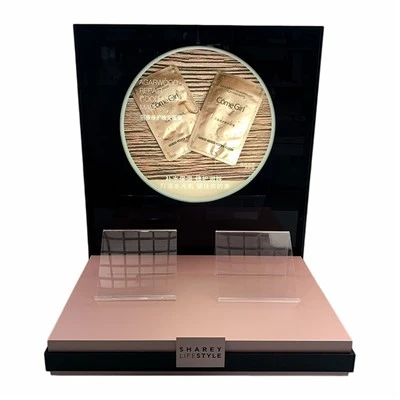
Let me start with a story that sums this up. A few months back, a client ran a local boutique that sold handmade ceramic mugs and candle holders. She’d been putting off upgrading her old, rickety wall-mounted shelves for a year because a friend had warned her about “hours of confusing instructions” for retail display racks. When she finally ordered our modular countertop display rack, she texted me an hour later with a photo of it fully assembled, next to her dog who’d somehow managed to knock over half a box of packing peanuts while she worked. That’s the thing: modern functional display racks aren’t the bulky, bolt-heavy units they were a decade ago. Most of the hassle people dread comes from the gap between what suppliers offer and what buyers expect—and it’s something we’ve spent years fixing on our end.
First, let’s break down why so many people think functional display racks are hard to install. A lot of older or budget racks on the market rely on custom hardware, metal brackets that only fit one specific panel, and instructions written for a team of construction workers, not a small business owner who’s used to restocking inventory, not assembling furniture. I still see suppliers ship racks with 12 different types of screws, no labeled parts bag, and a step-by-step guide that assumes you have a drill with 17 different bits handy. That’s the friction point. But here’s the thing: functional display racks, by definition, are designed to solve specific retail problems—maximizing shelf space, keeping fragile items accessible, or displaying products at eye level for shoppers. If we’re building them to work for your business, they should also work for you when you set them up.
At our company, we test every new rack line with non-construction staff. Last year, when we rolled out our line of floor-standing display racks for apparel, we recruited three people who’d never assembled anything more complex than a bookshelf. Two got them up in under 45 minutes; the third took an hour, but that was only because she kept stopping to take photos for her own shop’s social media. We made sure each part has a color-coded label, the hardware is all the same size (no more digging through a pile of mixed screws), and the instruction manual has photos instead of just text—something I wish every supplier would prioritize. We even include a “quick start” cheat sheet that lives on top of the packaging, so you don’t have to dig through a box to find the first step.
But here’s where the “easy” part gets tricky: it depends on the type of functional display rack you choose. Let’s split this into three common categories, because not all racks are created equal, and install time varies a lot between them.
Modular display racks are the easiest, in my experience. These are the ones you can piece together like Lego—no permanent bolts, just snap-and-lock joints. They’re perfect for pop-up shops or seasonal displays, because you can take them apart and store them easily when you don’t need them. Last holiday season, a client who runs a Christmas shop used three of our modular wall display racks to set up in their new pop-up location in a local mall. She and her two part-time employees had them assembled in an afternoon, and they even rearranged them twice that week when they shifted their featured products. The only tool you usually need for these is a Phillips-head screwdriver (and even that, some models don’t require—we’ve designed a few that lock with hand pressure alone). The key here is that modular racks are built with standardized, interchangeable parts, so there’s no guesswork when you’re putting them together.
Then there are fixed-position display racks, which are heavier, sturdier, and designed for permanent installations—like the ones you’d see in a grocery store’s produce section or a department store’s jewelry counter. These do require a bit more work, but not as much as people think. The mistake a lot of buyers make here is skipping the pre-install prep. We include a template with every fixed rack that marks exactly where to drill holes for mounting, so you don’t have to measure and guess. I always tell clients to take 10 minutes before starting to level the wall (or floor, if it’s a floor rack) and lay out all the parts. One client a few months back tried to skip the template and ended up with a rack that was two inches off-center—he had to unscrew and re-drill, which added 30 minutes to his install time. Do the prep work, and fixed racks are still manageable for someone with basic DIY skills.
The third category, custom functional display racks, is the one that trips most people up. If you order a rack made specifically for your store’s layout, it might have unique brackets, custom cut panels, or additional features like built-in lighting or storage. Install time here depends on how much custom work we’ve done, but even then, we make sure to send a dedicated guide tailored to that exact rack. Last year, a small boutique ordered a custom counter display for their handbags that included a built-in lock and a hidden drawer for cash. We included a video tutorial (accessible via a QR code on the packaging) that walked them through each step, and they had it assembled in about an hour. The secret here is that custom racks shouldn’t be more complicated—they just need to account for your specific needs, so we design the install to match that, not the other way around.
I know some of you are thinking, “But I’m not handy at all. Should I hire someone to put it together?” The short answer is: probably not, unless you’re working with a very heavy fixed rack that requires wall anchors for 50+ pounds of merchandise. For most functional display racks, a basic DIY skill level is enough. We’ve even had clients with mobility issues use our modular racks, since they’re lightweight and don’t require lifting heavy parts. The biggest mistake people make is assuming that because a rack looks industrial, it’s hard to install. Modern manufacturing has come a long way—we use lightweight aluminum for most of our racks, so even the largest floor models are easy to move and assemble alone.
Another thing to consider: post-install support. One of the reasons I started this company was because I hated seeing clients stuck mid-install with no one to turn to. We don’t just ship a rack and disappear. We have a team of support staff who can walk you through the process over the phone, send a replacement part if something gets damaged in shipping, or even schedule a virtual call to help you align the last few pieces. Last month, a client in a rural area tried to install a wall-mounted spice rack and couldn’t figure out how to attach the shelf brackets. Our support team hopped on a 15-minute video call with him, and he had it done right away. That kind of support makes a huge difference—installing a rack isn’t just about the product itself, it’s about the help you get when you need it.
Of course, there are exceptions. If you’re installing a very heavy-duty display rack for a warehouse or a large retail chain, you might need a professional. Those racks are built to hold hundreds of pounds of inventory, and they require secure mounting to support that weight. But for 90% of small businesses, boutiques, pop-ups, and cafes, functional display racks are designed to be user-friendly. We test every single rack we ship with a load test—we hang twice the maximum recommended weight on each shelf to make sure it’s sturdy, and we make sure the install process is simple enough that you can set it up the same day you receive it.
I’ll wrap this up by going back to that boutique owner I mentioned earlier. After she assembled her counter display, she texted me a photo of it filled with mugs, with a handwritten sign that said “easy to shop, easy to set up.” A few weeks later, she told me her sales went up 15% because the new display made her products more visible. That’s the point of functional display racks—they’re not just fixtures, they’re tools to help your business run better. And if they’re easy to install, that means you can start using them faster, without wasting time or money on professional help.

If you’re in the market for a functional display rack, don’t let install worries hold you back. Reach out to our team to discuss your space, your products, and what you need. We’ll walk you through the options, answer any questions about installation, and make sure you get a rack that works for your business. Whether you need a modular countertop display for a pop-up, a fixed floor rack for your boutique, or a custom design that fits your exact layout, we’ve got you covered. Don’t hesitate to get in touch to start the conversation.
Display Shelf References:
- Retail Technology Association. (2023). Small Business Retail Fixture Installation Best Practices.
- Journal of Retail and Consumer Services. (2022). Modular Display Systems: Usability and Install Efficiency for Small Retailers.
- National Retail Federation. (2023). 2023 Retail Display Fixture Trends: Accessibility and User-Centric Design.
Shenzhen Xingzhong Display Products Co., Ltd.
As one of the most professional functional display rack suppliers in China, we’re featured by quality products and good service. We warmly welcome you to buy customized functional display rack made in China here from our factory. If you have any enquiry about quotation and free sample, please feel free to email us.
Address: 80 Tangkeng Road, Biling Street, Pingshan District, Shenzhen, Guangdong Province
E-mail: leo@xzdisplay.com
WebSite: https://www.xzdisplay.com/
