If you’re in the market for aluminum die casting parts, whether for automotive components, aerospace hardware, consumer electronics, or industrial machinery, you’ve probably asked yourself: Are there reliable aluminum die casting manufacturers operating in the USA? The short answer is yes—but the details matter. As someone who’s been in the aluminum die casting supply chain for over 12 years, I’ve navigated the nuances of domestic manufacturing, from small job shops to large-scale production facilities, and I’ve seen firsthand how U.S. manufacturers balance quality, lead times, and supply chain resilience in a way that global competitors often can’t match. Aluminum Die Casting

I still remember a client from the Midwest automotive sector reaching out to me five years ago, frustrated with their overseas supplier’s consistent delays and quality issues. They’d sourced transmission housing parts from a factory in Asia for years, but a 2019 port congestion crisis had pushed delivery times out by six weeks, and a batch of parts with uneven wall thicknesses led to a $200,000 recall. That’s when they turned to U.S. aluminum die casting manufacturers, and what they found was a network of shops that had invested millions in automation, quality control, and sustainable practices—all while adhering to strict industry regulations like ISO 9001 and IATF 16949, which are critical for automotive and aerospace applications.
One of the biggest advantages of working with a U.S.-based aluminum die casting manufacturer is proximity. Unlike overseas suppliers, where shipping can take 4–8 weeks (or longer during disruptions), domestic manufacturers offer lead times as short as 1–2 weeks for prototype runs and 4–6 weeks for full production orders. That speed doesn’t mean cutting corners, either. U.S. facilities use advanced die casting processes—like high-pressure die casting (HPDC), low-pressure die casting (LPDC), and gravity die casting—each tailored to specific part requirements. For example, HPDC is ideal for high-volume, complex parts like engine brackets, while LPDC is used for parts needing tighter density control, such as aerospace landing gear components. As a supplier, I’ve seen how U.S. shops also offer in-house secondary services—machining, finishing, powder coating, and assembly—so clients don’t have to coordinate with multiple vendors, reducing the risk of misalignment and cost overruns.
Another key factor is quality consistency. U.S. aluminum die casting manufacturers are held to rigorous standards that many overseas facilities struggle to meet. For instance, automotive clients require parts to withstand extreme temperatures, vibration, and corrosion, and U.S. producers follow Material Specifications (AMS) from the Society of Automotive Engineers (SAE) that outline exact chemical compositions for aluminum alloys—like A380, A383, and A413—each chosen for specific properties. I recently worked with a medical device company that needed biocompatible aluminum parts for a new insulin pump; their U.S. supplier not only met ISO 10993 biocompatibility standards but also performed non-destructive testing (NDT) like X-ray and ultrasonic testing on every batch, a level of scrutiny that’s harder to enforce when sourcing internationally.
It’s also worth noting that the U.S. aluminum die casting industry has evolved significantly in the last decade, driven by both demand for supply chain resilience and investments in sustainability. Many manufacturers now use recycled aluminum—up to 95% less energy-intensive than primary aluminum production—to reduce their carbon footprint, which is a huge selling point for clients aiming to meet ESG goals. During the 2022 Inflation Reduction Act, several domestic die casting firms received tax incentives to upgrade their equipment, adding 3D printing for prototype dies and robotic automation for quality inspections. This means U.S. suppliers can now offer the same rapid prototyping capabilities that were once only available overseas, without the risk of intellectual property theft— a concern many companies have when sharing design files with foreign factories.
Of course, not all U.S. aluminum die casting manufacturers are the same. There’s a wide range of options, from small, specialty shops that focus on low-volume, high-precision parts to large facilities that can produce millions of parts annually. For startups or small businesses, a smaller U.S. shop might be a better fit, as they often offer more personalized support, flexible order quantities, and faster turnaround for custom prototypes. For example, a tech startup I collaborated with two years ago was developing a new wireless charger and needed a custom aluminum casing; a local U.S. die casting shop helped them iterate on their design in just two weeks, adjusting wall thickness and venting to improve heat dissipation, something an overseas supplier would have taken months to do.
On the other end of the spectrum, larger U.S. manufacturers have the capacity to serve big-name clients like Ford, Boeing, and Apple. These facilities invest in large-scale die casting machines—some with clamping forces over 4,000 tons—capable of producing parts as large as a car’s entire chassis. In 2020, Ford partnered with a U.S. aluminum die casting manufacturer to produce the F-150’s front shock tower as a single casting, reducing the number of parts from 12 to 1 and cutting production time by 30%; this kind of innovation is only possible when working with a domestic supplier that understands U.S. automotive manufacturing’s specific needs and can align with local assembly lines.
That said, there are still misconceptions that lead some companies to overlook U.S. manufacturers. Some assume that domestic production is too expensive, but when you factor in shipping costs, tariffs, and quality-related waste (like recalls and rework), the total cost of ownership often works out to be comparable or even lower. A client in the agricultural equipment sector once told me that while their overseas supplier offered a lower per-part price, the rework costs for parts with porosity issues added 20% to their overall budget. When they switched to a U.S. supplier, the per-part price was 15% higher, but no rework was needed, and lead times were cut by half, resulting in a net savings of 8%.
If you’re considering working with a U.S. aluminum die casting manufacturer, it’s important to do your due diligence. Look for certifications relevant to your industry—ISO 9001 for general manufacturing, IATF 16949 for automotive, AS9100 for aerospace. Ask about their in-house quality testing capabilities, their material sourcing (do they use U.S.-produced aluminum or imported?), and their ability to handle your order volume. Avoid manufacturers that outsource their die casting production to overseas factories while marketing themselves as “U.S.-based”—that’s a common loophole, and it negates many of the benefits of domestic sourcing.
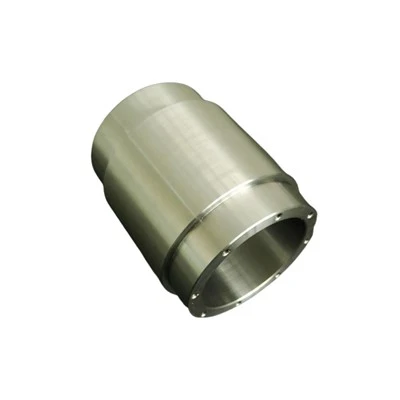
As someone who’s been on the ground in this industry for years, I can tell you that the best U.S. aluminum die casting manufacturers are more than just suppliers—they’re partners invested in your success. They’ll work with you to optimize your design for manufacturability (DFM), reduce material waste, and ensure your parts meet all regulatory requirements. Whether you’re a small business launching a new product or a large corporation looking to shore up your supply chain, there’s a U.S. aluminum die casting manufacturer that can meet your needs.
Magnesium Die Casting If you’re ready to explore domestic aluminum die casting solutions for your project, I encourage you to reach out to a trusted U.S. supplier to discuss your requirements, from prototype development to full-scale production. Don’t let concerns about overseas delays or quality issues hold you back—U.S.-based manufacturers have the experience, technology, and reliability to deliver the parts you need, when you need them.
References
- "U.S. Die Casting Industry Overview," National Tooling and Machining Association, 2023.
- "Aluminum Die Casting Material Specifications," Society of Automotive Engineers (SAE International), 2022.
- "Supply Chain Resilience in Manufacturing," McKinsey & Company, 2021.
- "Sustainable Aluminum Production: Energy Comparison," Aluminum Association, 2022.
- "IATF 16949 Certification Requirements for Die Casting Facilities," International Automotive Task Force, 2023.
Shenzhen Shunhaoda Technology Co., Ltd.
With abundant experience, we are one of the most professional aluminum die casting manufacturers and suppliers in China. If you’re going to buy bulk high quality aluminum die casting made in China, welcome to get free sample from our factory. Also, custom service is available.
Address: 902, Building A3, Tianrui Industrial Park, No. 35 Fuyuan 1st Road, Zhancheng Community, Fuhai Street, Bao’an District, Shenzhen
E-mail: sales@shdindustry.com
WebSite: https://www.shd-industry.com/
