Hey there, if you’ve ever shopped for cube magnets—whether for a school science project, a DIY shelf upgrade, or even just fidgeting with them on your desk—you’ve definitely run into two big players: neodymium cubes and ferrite cubes. As someone who’s been selling these bad boys for years, I can’t tell you how many times customers hit me up going, “Wait, what’s actually the difference between these two? I thought all magnets were the same!” Spoiler: nope, they’re night and day, and picking the wrong one can turn your whole project (or product) into a flop. Let’s break this down like I’m chatting with you over a coffee, no fancy jargon unless I explain it. Cube Magnets
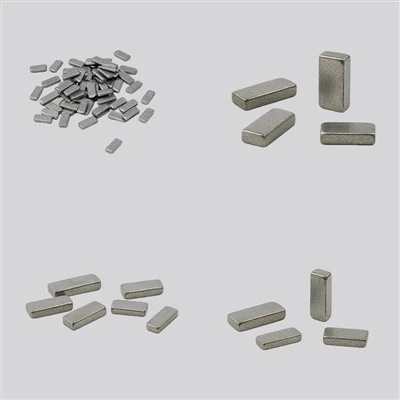
First, let’s start with the basics I probably should’ve led with: what even are these two? Ferrite magnets—sometimes people call them ceramic magnets, trust me, I hear that all the time—were first developed back in the mid-20th century, using iron oxide mixed with a bunch of other metallic oxides. Neodymium? That’s the new kid on the block, invented in the 1980s, part of the rare earth magnet crew, made with neodymium, iron, and boron. Both come shaped into cubes, obviously, which is perfect for fitting into tight spots, lining up exactly where you need them, or stacking in neat grids. But that’s where the similarities end, for real.
The biggest thing everyone cares about? Strength. Like, duh, why else would this matter? Neodymium cubes are basically the heavyweights of the magnet world. Let’s put this in perspective: a tiny 10mm neodymium cube I sell pulls hard enough to lift a full soda can off a metal surface, no problem. A same-sized ferrite cube? It can barely hold that can, maybe, if you push it right. We’re talking 5 to 10 times stronger here—no exaggeration. I remember a customer last year who was building a custom metal toolbox lathe; he tried ferrite first and it kept popping open when he tossed the toolbox in his truck. Switched to neodymium cube magnets and hasn’t had an issue since. Ferrite is fine for light duty, but neodymium is for when you need real oomph. That said, strength has a catch: neodymium gets weaker if it’s super hot, right above 80°C (that’s 176°F for my fellow Americans) and ferrite can handle way more heat—like up to 250°C, no sweat. So if you’re using magnets near a stove, in an engine, or something that gets warm, ferrite might be the safer pick, even if it’s weaker.
Next up, price. This is a huge one for both hobbyists and small businesses. Ferrite cubes are basically cheap as chips. I can tell you, a pack of 50 small ferrite cubes costs like a few bucks total. Neodymium? Way more, because rare earth metals are pricey to mine and process. You’ll pay 5 to 20 times more for the same number of neodymium cubes vs ferrite. I get it, budget is everything, but don’t just go for the cheapest option—like that customer with the toolbox, if he’d stuck with ferrite he’d be redoing his lathe, which would’ve cost way more than just buying the right magnets. That said, if you’re doing a tiny desk decoration or a kid’s school project that only needs a little hold, ferrite is totally worth saving the cash.
Durability and weight—wait, did I forget weight? Neodymium is way denser than ferrite, so same-sized cubes? Neodymium is heavier. Not like, annoyingly heavy, but you’ll notice it if you’re handling a bunch. Durability-wise, ferrite is way more brittle. Drop a ferrite cube on concrete and it’ll chip, crack, or even shatter into pieces. Neodymium? It’s harder, more resistant to chipping, though if you let two big ones slam together (guilty of doing that once as a newbie seller) they might crack if it’s a hard impact. Also, corrosion! Neodymium rusts super easy if it’s not coated—we plate all our neodymium cubes with nickel-copper-nickel, so they’re pretty resistant, but leave one in water and it’ll get spotty fast. Ferrite is non-corrosive, no coating needed, so it’s fine for outdoor use or near water, as long as you don’t drop it too hard.
Wait, let’s talk common use cases, because that’s how most people end up picking one over the other. Ferrite cubes: great for little things like fridge magnets, model trains that don’t need a strong pull, kids’ magnet sets (since they’re less powerful and less likely to pinch fingers—trust me, I’ve heard horror stories about neodymium pinching), and even some audio equipment. Neodymium cubes are for the stuff that needs real hold: industrial lathes, magnetic hooks that hold heavy tools, closing heavy cabinet doors, DIY projects where you don’t want magnets slipping, and even some jewelry clasps that need to stay closed. I had a woodworker last month using neodymium cubes to hold a cutting guide steady on his table saw, and he said it’s way better than the old clamps he was using.
Now, a few myths I hear all the time, let’s bust those. First, people say “neodymium is always better” — no, not if you don’t need the strength, you’re just wasting money. Second, “ferrite never loses strength” — wrong, it can lose some pull over time if it’s exposed to super cold temps or if it’s not cared for, just not as bad as neodymium. Third, “both cubes feel the same in your hand” — nope, neodymium is noticeably heavier if you hold same-sized ones side by side.
As someone who’s been in the cube magnet game for years, I see it all: hobbyists overbuying neodymium for no reason, small businesses buying cheap ferrite that doesn’t work, people getting pinched by big neodymium cubes (pro tip: don’t let two snap together fast, it hurts more than you think). My job isn’t to sell you the most expensive stuff—it’s to help you get the right magnet for your project. If you’re not sure, just reach out— I can walk you through it, no pressure, no sales pitch garbage.
At the end of the day, it boils down to three things: strength needed, budget, and environment. If you need a strong hold, can pay a bit more, and it’s not super hot or wet? Neodymium cubes. If you’re on a tight budget, need corrosion resistance, and just need a light hold? Ferrite cubes. There’s no “bad” choice, just the wrong one for your specific job.

If you’re ready to grab some cube magnets for your next project, or you still have questions about which type works for what you’re doing, hit me up to talk shop. I’d be stoked to help you out.
Round Countersunk Magnets References:
- Magnet Basics: Understanding Permanent Magnets, National High Magnetic Field Laboratory
- Properties of Neodymium and Ferrite Magnets, Magnetics Manufacturer Association
- Practical Applications of Cube Magnets in DIY and Industrial Projects, DIY Science Journal
Dongguan Jinconn New Material Holdings Co., Ltd.
We’re well-known as one of the leading cube magnets manufacturers in China, featured by quality products and low price. Please rest assured to buy bulk advanced cube magnets in stock here from our factory. We also accept customized orders.
Address: Xiaohe Industry Zone, Daojiao Town, Dongguan City, Guangdong Province, China
E-mail: lena@jinconn.com
WebSite: https://www.jinconnmagnet.com/
