Hey folks, let’s cut to the chase—if you’re hanging around DC power systems (whether you’re a solar installer, RV tech, off-grid homesteader, or even someone tinkering with a big battery bank), you’ve probably stared at a DC energy fuse at some point and thought, “Wait, do I actually need a holder for this thing?” I’m Jake, I run the DC energy fuse supply side of a small but sharp electrical components shop, and I get this question literally every single week. No cap, it’s one of the most common DMs I get from folks testing new setups or troubleshooting old ones. Today, we’re breaking this down, no textbook jargon—just real-world stuff I’ve seen, worked on, and sold to hundreds of happy customers. DC Energy Fuse
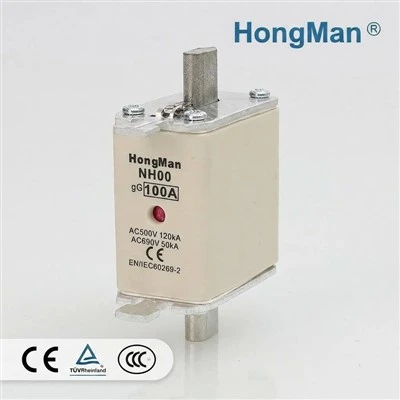
First, let’s start with what a DC energy fuse actually is, because a lot of people mix these up with regular automotive fuses or AC fuses. AC fuses are built to handle alternating current, which flips direction 50 or 60 times a second—DC? That’s straight, steady current, no flipping. DC fuses are designed to interrupt that flow when there’s a short or overload, and they need to do it safely without arcing across the contacts, which is way worse in DC systems because the current doesn’t naturally stop like AC does when it crosses zero. A DC fuse is a little cylinder or blade (depending on the type) with metal end caps on each side, right? Those end caps are meant to make a solid connection to your circuit, that’s where the holder comes in.
Now, let’s answer the big question: Do DC energy fuses need a fuse holder? The short answer is—yes, almost always. But let’s not stop there, because there are edge cases that make people confused, and I don’t want you blowing up a circuit or worse because you skipped a step. First, let’s talk about why holders matter. A fuse isn’t just a little bit of wire that melts when it gets hot. For DC, especially higher-voltage DC (like 48V solar systems, which are super common now, or even 120V DC for some industrial setups), the connection between the fuse and the circuit has to be consistent and secure. If you just jam a fuse into a terminal block or twist wires around the end caps? That’s a bad idea. You’ll get loose connections, which cause heat buildup, voltage drops, and even arcing. Arcing in DC is no joke—it can melt plastic, start fires, or even shock you, because DC doesn’t die out on its own.
I had a customer last year, a guy named Mike who builds off-grid cabins, told me he was “saving money” by not using holders. He said, “I just crimped the wires right to the fuse ends, done.” Three months later, he hit a deep discharge on his battery bank, and the fuse got so hot from the loose connection that it melted the plastic on his battery controller. He came back to me, sheepish, and said he’d have saved way more than the $20 he “skipped” on holders. That’s the kind of story I hear all the time—people thinking holders are a frivolous add-on, when they’re actually part of the safety system.
But wait, what if you’re doing a super temporary setup? Like, testing a new solar panel in your garage, running a 12V system for a little project. Can you get away with shoving the fuse in without a holder? Maybe, but only if it’s low current (like under 10A) and low voltage (12V or less) for a quick test. But even then, I’d warn you—you’re taking a risk. If that test setup has a short, the fuse will blow, but the loose connection could cause a fire before it does. For any permanent setup, or any system over 24V, 15A? No way. Holders are non-negotiable here.
Let’s break down the types of holders too, because not all DC fuse holders are the same. I sell three main types, and I match them to what customers need, no one-size-fits-all garbage. First, the blade fuse holders—these are the ones you see in cars, but the good ones are rated for DC, not AC. They’re easy to install, you just plug the blade fuse in, and they mount right to a panel or a fuse block. Perfect for small RV systems, ATVs, or low-voltage solar. Then there’s the cartridge fuse holders—those are the long, cylindrical fuses, common in higher-voltage solar setups (like 48V) or battery banks. These holders have screw terminals, so you get a solid, tight connection that can handle more current and voltage without arcing. Third, I sell inline fuse holders—these are the ones you thread into a wire, so you can mount the fuse right in the line, no need for a big panel. Great for adding a fuse to a new circuit you’re building from scratch.
Now, what about the features you should look for in a DC fuse holder, because not all holders are safe? A lot of cheap holders on Amazon are labeled for “DC” but they’re actually AC holders repackaged. That’s a problem. AC holders aren’t built to interrupt DC arcing, so if you use an AC holder for DC, it can arc over when the fuse blows, which defeats the whole purpose of having a fuse. I only carry holders that are explicitly rated for DC, with the right voltage and current rating to match your fuse. For example, if you have a 30A, 48V DC fuse, you need a holder rated for at least 30A and 60V DC—don’t mix and match. Also, look for holders with insulated lids, so you don’t accidentally touch live terminals when swapping a fuse, and corrosion-resistant metal. DC systems, especially in outdoor setups like solar or RVs, get exposed to moisture, dust, and salt, so a holder that rusts or gets gunked up will cause bad connections fast.
Another point: Do DC energy fuses come with holders included? Sometimes, but not always. A lot of budget fuses are sold loose, so you have to buy the holder separately. I always tell customers to buy the holder at the same time as the fuse—don’t try to match them later. Fuses and holders have to be compatible in terms of size (a 5x20mm cartridge fuse won’t fit a 10x38mm holder), so getting them together saves you the headache of returning or exchanging parts. I’ve had customers buy a bunch of fuses then show up with the wrong holders, wasting time and money. Just plan ahead.
Wait, what about people who use fuse blocks? Oh, right, those are super common for multiple circuits. A good DC-rated fuse block is basically a set of holders all in one plastic or metal block, mounted to your panel. Each slot has its own holder, so you can swap fuses for different circuits without messing with others. If you have a solar system with 10 panels, or an RV with lights, fridge, and water heater, a fuse block with proper holders is way cleaner and safer than installing a bunch of individual inline holders.
Let’s talk about the alternative—skipping a holder. What happens when you don’t use one? First, bad connections, as I mentioned earlier. Loose connections cause resistance, which turns into heat. Over time, that heat can wear out the fuse, the wires, or the device it’s connected to. Then there’s arcing. When a fuse is doing its job and blowing to stop a short, the contact points need to separate cleanly. If they’re jammed together without a holder, they might not separate right, and the arc can keep going, letting the current flow even when the fuse is supposed to be off. That’s how fires start—believe me, I’ve seen the after photos. I once had a customer bring me a charred RV dashboard, and the culprit was a guy who skipped the holder for his dash cam fuse. The loose connection arced, burned through the plastic, and the whole front of the RV almost went up. Scary stuff, and all because he thought holders were unnecessary.
Now, are there any cases where you can use something else instead of a fuse holder? Like, can you solder a fuse into the circuit? Yeah, technically, but that’s not ideal. Soldering creates a permanent connection, so if the fuse blows, you have to desolder it and replace it, which is a pain. Holders let you swap a fuse in 10 seconds—just pull the old one, push the new one. Way faster, especially for off-grid folks who might be in the middle of nowhere when a fuse blows. Soldering also means you have to make sure the solder joint is tight, same as a holder, and if you mess up the solder, you get the same heat and resistance issues. So holders are way more practical, not just safer.
I also get asked, “Can I use an AC fuse holder for DC fuses?” Absolutely not, and here’s why. AC fuses have a feature called a “quenching chamber” that puts out the arc when the current crosses zero. DC current doesn’t cross zero, so DC fuses are built with longer contact gaps and different materials to handle the arc. AC holders don’t have that, so when a DC fuse blows in an AC holder, the arc can jump across the holder’s contacts and keep the current flowing. It’s called “re-striking,” and it’s a huge hazard. I’ve tested this myself with a customer’s old setup—used an AC holder for a 12V DC fuse, and when we simulated a short, the arc didn’t go out. We had to shut off the main breaker to stop it. Don’t do that. Only use DC-rated holders.
Let’s wrap this up with some quick takeaways, because I know I rambled a little (that’s just how I talk about this stuff). First: For any permanent DC system, any system over 12V or 10A, you need a DC-rated fuse holder. It’s not optional safety gear, it’s part of the circuit’s protection. Second: Don’t skimp on cheap holders—only get ones explicitly rated for DC, matching your fuse’s voltage and current, and make sure they’re the right size for your fuse type (blade, cartridge, etc.). Third: Buy your fuses and holders together to avoid compatibility issues. Fourth: If you’re doing a temporary, super low-voltage test setup, you might get away without a holder, but I still recommend it to avoid headaches later.
Now, if you’re working on a project and you’re not sure what holder you need, or you just need to stock up on DC energy fuses and holders, hit me up. I don’t do the hard sell— I’ll tell you exactly what you need, no overpriced add-ons, no vague advice. I’ve been in this game long enough to know that the right parts make all the difference, and I want your setup to be safe and work right, not just get by.

When it comes to DC energy fuses and their holders, the bottom line is this: Don’t take shortcuts with safety. The $5 or $10 you save skipping a holder isn’t worth the risk of a fire, a damaged battery bank, or a costly repair. I’ve seen way too many folks regret that call, and I’d rather you not be one of them. Reach out anytime if you’ve got questions, need help picking parts, or want to order bulk for your shop or project.
Wind Power Fuse Holder References
- National Electrical Code (NEC) Article 240 for Overcurrent Protection in DC Circuits
- Underwriters Laboratories (UL) Standard 248-14 for Low-Voltage Fuses
- Solar Energy International (SEI) Guide to DC System Safety for Off-Grid Installations
- Institute of Electrical and Electronics Engineers (IEEE) Standard 1566 for DC Fuse and Holder Compatibility
Zhejiang Hongman Electric Technology Co., Ltd.
Zhejiang Hongman Electric Technology Co., Ltd. is one of the most professional dc energy fuse manufacturers and suppliers in China. We have world-leading production equipment and strong manufacturing capabilities. Please feel free to wholesale bulk cheap dc energy fuse from our factory. All customized products are with high quality and competitive price.
Address: 115 XinGuang Avenue,XinGuang Industrial Zone, Liushi Town, Yueqing City, Zhejiang Province. China
E-mail: mia@chinahongman.com
WebSite: http://www.cnfuse.com/
