If you’re a manufacturer relying on a fully automatic production line, you know the drill: speed = output, output = revenue. But here’s the thing—cranking up speed without breaking your line, wasting materials, or sacrificing quality is way trickier than just hitting a “fast” button. As a supplier of fully automatic production lines, I’ve worked with hundreds of plant managers who come to me frustrated because their line is supposed to run at 120 units per minute, but it’s stuck at 85. Most of the time, the fixes aren’t about buying a new line—they’re about tweaking what you already have, no fancy upgrades required. Let’s break this down like we’re chatting on a shop floor, not a sales pitch. Fully Automatic Production Line
First off, don’t sleep on baseline audits. I see this all the time: a plant will guess their line’s bottleneck is the packaging station, but it’s actually the stamping unit that can’t keep up. A solid audit takes a few days—you just track every station’s cycle time, downtime, and error rates for a full shift, no skipping breaks or changeovers. For example, last quarter I worked with a small kitchenware maker who thought their bottleneck was the labeling station. Turns out their metal forming press was slowing down because it was running 10% slower than its rated speed to avoid jams. We tested a minor adjustment to the press’s pressure setting, no parts replaced, and boom—their line speed jumped 18% overnight, no extra costs. The key here: don’t assume your bottleneck is the obvious one. Even a $1,000 audit from a trusted supplier (like us, we do these for new clients for half our usual rate) will pay for itself in a week if it cuts downtime.
Next, small, targeted upgrades to core components are way more effective than overhauls. You don’t need a robot arm upgrade if your line’s conveyor is dragging its feet. Most automatic lines use off-the-shelf conveyors that wear out in 3-5 years—replacing the belting with a high-tension, low-friction synthetic blend can cut conveyor lag by 12-15%. Another easy win: motor drives. Older variable frequency drives (VFDs) can only adjust speed in coarse increments, while modern VFDs let you tweak speed by 0.5% instead of 5%, which eliminates that tiny delay between stations where parts get backed up. I recently retrofitted 3 bakery lines with new VFDs and high-tension belting, and all of them hit their rated speed within a month—no new lines, no big investments. The mistake I see here is waiting for a full breakdown to upgrade: replace worn components proactively, not reactively.
Then, sync your line’s PLC programming—this is the hidden superpower most plants miss. Programmable Logic Controllers (PLCs) are the brains of your automatic line, and if their timing is off by even a second between stations, you get jams, idle time, or parts that don’t align. For example, if your molding unit finishes a part at the same time your transfer arm is busy, you get a 10-second jam that adds up to 30 minutes of downtime a day. Most factory technicians only program PLCs during initial setup, but as parts wear or product specs change, that timing drifts. We offer a free PLC sync check for existing lines, and half the time, fixing a 2-second delay between the transfer arm and packaging station adds 10-12 units per minute to their line. It’s not flashy, but it’s the kind of small fix that moves the needle.
Don’t overlook operator training—even for fully automatic lines. A lot of plant managers think “fully automatic” means no humans needed, but that’s the opposite of true. Your operators are the first line of defense against small issues that blow up into big downtime. For example, I worked with a furniture parts maker whose line had a 15-minute “unplanned” downtime every day, which the team blamed on “random glitches.” Turns out, their operators didn’t know how to adjust the line’s parts alignment sensor quickly—they’d shut down the whole line and call for a technician, which took 10 minutes each time. We did a 4-hour hands-on training for their operators: how to calibrate sensors, reset small jams in 60 seconds, and spot wear on parts before it causes a breakdown. After that, their unplanned downtime dropped by 70%, and their line speed went up 10% because they stopped losing time to shutdowns. Training isn’t a one-and-done thing either—refresh every 6 months, especially if you switch products or add new parts to the line.
Another big one: material and part consistency. If your incoming raw parts are slightly warped, or your plastic pellets have varying density, your automatic line has to slow down to avoid jams. Even a 5% variation in part size can cause a 10% drop in line speed. We’ve seen this with electronics assembly lines: a maker was buying cheap plastic casings from a overseas supplier that had 8% variation in thickness. Their insert press would jam 2-3 times an hour, so they ran the line at 10% slower speed to compensate. Switching to a domestic supplier with a 1% variation tolerance fixed the jams, and they upped their line speed back to 120 units per minute. It’s not just about raw materials either—your own line’s parts: if your transfer arms have loose grip points, parts slip, and you have to slow down. Regular calibration of grippers and sensors is non-negotiable.
Now, let’s talk about changeovers—those inevitable stops when you switch from one product to another, which can eat up 20-30% of a line’s production time. I’ve seen plants take 2 hours to switch from a small cup to a large bowl on their packaging line, but we can get that down to 20 minutes with a few tweaks. First, modular tooling: instead of manually adjusting every guide and sensor, use quick-change modules that clip on in seconds. For example, a filling line with modular nozzles lets you swap from a 100ml to 500ml container in 5 minutes instead of 45. Second, prepping everything offline: have a dedicated station where operators can set up the new product’s tooling while the line is running, so they just swap it in when the current run is done. Last year, a beverage maker cut their changeover time by 75% using this trick, and their total annual output went up by 120,000 units—no new line, just better changeover processes.
Wait, let’s get real—no optimization is permanent. Your line’s speed will drift over time because of wear, product changes, or even new employee training. That’s why regular check-ins (quarterly, at minimum) are key. We offer quarterly line audits for our clients, where we track cycle times, downtime, and error rates, and make small adjustments before issues become big problems. For example, a toy manufacturer we work with noticed their line speed was dropping 5% after 6 months of running. We did an audit and found their conveyor belting had stretched 3%, so they replaced a small section, and the speed was back to normal. Skipping these check-ins is like driving a car and never getting an oil change—you’ll end up with a breakdown that costs way more than the maintenance.

Now, I know what some of you are thinking: “I need a faster line, not tweaks to my old one.” But let’s crunch the numbers: a new automatic production line costs $500k-$2M, depending on the type. The tweaks I mentioned—audits, component upgrades, PLC sync, training—usually cost $5k-$20k, and give you 10-20% faster speed immediately, without the big price tag. Only if you’ve done all the small fixes and you’re still 10% below your target speed should you think about a full line upgrade. And even then, we can custom-build a line that fits your needs, no overpaying for features you don’t use.
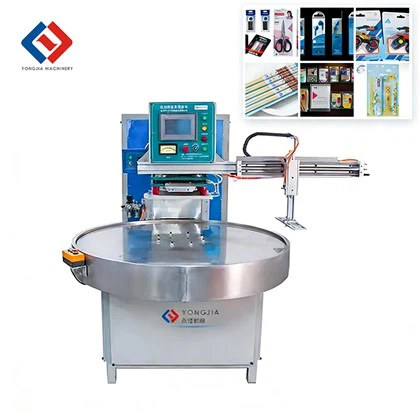
Blister Packaging Machine At the end of the day, optimizing a fully automatic production line isn’t about chasing the highest speed number—it’s about making the speed you already have consistent and reliable. Most plants waste so much time on unplanned downtime, slow changeovers, and outdated components that they never reach their full potential. Whether you’re a small shop with a single line or a big factory with 10 lines, the steps I mentioned work. If you’re tired of your line underperforming, or you want to run a speed test to see how much you could gain, hit us up for a consultation. We can walk you through your line, point out the low-hanging fixes, and even give you a free quote if you need a upgrade. Don’t let your line leave revenue on the table—let’s get it running at its best.
References
- Global Automation and Robotics Association. (2023). Optimization of Automatic Production Line Performance: Industry Best Practices. GARA Press.
- Smith, J. (2022). "Reducing Unplanned Downtime in Manufacturing Lines: A Data-Driven Approach". Journal of Industrial Engineering and Operations Management.
- Patel, R. (2021). Cost-Effective Upgrades for Aging Automatic Production Lines. Manufacturing Technology Association.
- Chen, L. (2023). "PLC Timing Synchronization and Its Impact on Production Speed". International Journal of Advanced Manufacturing Technology.
Dongguan Yongjia Machinery Equipment Co., Ltd.
We are one of the most reliable fully automatic production line manufacturers and suppliers in China, specialized in providing high quality customized service. Please feel free to wholesale advanced fully automatic production line at low price from our factory. For quotation, contact us now.
Address: No. 240, Chashan South Road, Chashan Town, Dongguan City, Guangdong Province, China
E-mail: info@yjwelding.com
WebSite: https://www.yjhighfrequencymachine.com/
