If you’ve ever walked past a weathered, rusty bridge along a highway, or a sleek urban sculpture that looks intentionally oxidized instead of freshly painted, chances are you were looking at ASTM/ASME Corten Steel. For years, this material has been the subject of confusion among specifiers, architects, and even fabricators: the big question most ask is, “Does it require painting, ever?” As a supplier who’s worked with Corten Steel for over a decade, I’ve fielded this question from both first-time buyers who want to avoid maintenance costs, and seasoned engineers who still associate steel with rust-related failure. Let’s break this down with the science of Corten, its code requirements, and real-world use cases to cut through the noise. ASTM/ASME Corten Steel
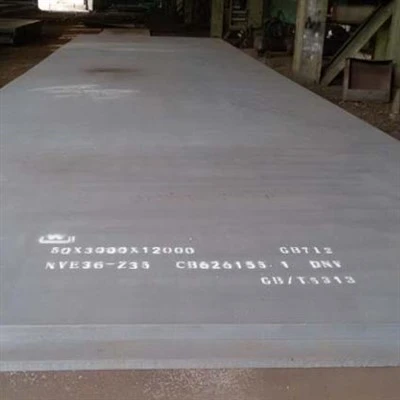
First, let’s clarify what makes Corten different from regular carbon steel, because that’s the root of the painting debate. ASTM A588 and ASME SA588—the two core standards for Corten Steel—are high-strength low-alloy (HSLA) steels formulated with small, precise additions of copper, chromium, nickel, and phosphorus. Unlike plain carbon steel, which rusts uniformly and flakes away (that’s the red, crumbly rust you see on old fence posts that need frequent painting), Corten Steel develops a tight, stable patina over time. This patina is not the same as surface rust: it’s a layer of corrosion products that binds to the underlying steel, preventing further oxidation. The formation of this protective layer is a process, not a one-time event, and its success depends entirely on the environment it’s in.
Here’s where the science matters, and why painting is not a one-size-fits-all answer. For Corten to form that stable patina, two key conditions must be met: consistent moisture exposure, and adequate ventilation (no trapped water against the steel surface). In environments where it rains regularly, like most parts of the U.S. Midwest, Europe, or East Asia, the patina forms in 2 to 8 years. The rain washes away excess salts and unbound corrosion products, letting the patina harden into a dark, matte brown or gray coating. Once that layer is fully formed, it stops the steel from corroding further—so you won’t need to paint it after that point, if at all.
But what about harsh environments? I’ve had customers working in coastal regions call me worried about salt air, or operators in industrial areas where there are high levels of sulfur dioxide or chemical fumes. Salt is a big problem here: it’s hygroscopic, meaning it draws moisture to the steel surface even when there’s no rain. That moisture, combined with salt, breaks down Corten’s protective patina before it can fully form, leading to pitting corrosion instead of the uniform, stable layer. In those cases, painting isn’t just a recommendation—it’s often required by the ASTM/ASME standards for Corten, or by project codes, to prevent premature failure. Similarly, if you’re using Corten in a structure where water will be trapped against the steel, like a hidden beam in a concrete slab, the patina can’t form because there’s no air circulation. The trapped moisture will cause rust to expand and push the patina away, leading to structural damage.
I’ve seen this play out firsthand with two projects I supplied Corten for. A small urban park in Pittsburgh, which gets steady rain and moderate humidity: we supplied 12 tons of ASTM A588 for park benches and a small footbridge in 2012. By 2017, the patina was fully formed—dark, uniform, no flaking. The city hasn’t touched it since, and a 2022 inspection showed no corrosion. Contrast that with a customer in Miami, who ordered Corten for a waterfront walkway in 2019. They skipped painting and didn’t account for the constant salt spray. By 2021, the patina was patchy, with areas of pitting up to 1mm deep. We recommended removing the loose rust, applying a zinc-rich primer, and a topcoat of UV-stable polyurethane, and that walkway has held up perfectly since.
Now, let’s address the code requirements, because ASTM and ASME have clear guidelines on this, even if they’re not always widely known. ASTM A588’s section on corrosion resistance states that the steel is intended for use in applications where it can develop a protective patina. The official commentary for the standard notes that painting is acceptable but not required in most atmospheric exposure conditions, unless the application is in a corrosive environment (per ASTM G150, the standard for testing atmospheric corrosion) or where appearance is critical before the patina forms. ASME SA588, used for pressure vessels and structural components in power plants and pipelines, has similar language: for non-pressure structural parts, patina formation is sufficient in moderate environments, but for components in contact with chemicals or salt water, a protective coating is required to meet ASME’s corrosion resistance requirements.
A common misconception I run into is that Corten is “maintenance-free” forever. That’s not true—like any material, it has limits. If a project is in an arid climate, like the Arizona desert, the low rainfall means the patina can’t form properly. The steel will rust slowly, with no rain to wash away unbound corrosion products, so the patina stays powdery and doesn’t protect the underlying steel. In that case, painting is necessary to extend the service life of the structure. Even in moderate climates, some specifiers choose to paint Corten for aesthetic reasons, to get a specific color before the patina develops. That’s a design choice, not a requirement, but it’s a valid one for projects where consistent color is needed from day one.
Another factor is the thickness of the steel. Thinner Corten sections, like 1/4-inch plates used for decorative metalwork, need to form the patina quickly to maintain their structural integrity. Thicker sections, like 2-inch beams used for bridge girders, have more material to lose to corrosion, so they can tolerate a slower patina formation in moderate environments. For thin sections in corrosive areas, painting is often recommended to prevent corrosion from eating through the plate before the patina is stable.
I always advise customers to do two things before deciding whether to paint Corten Steel: first, get a corrosion zone assessment for their project location. The EPA and ASTM have maps of atmospheric corrosion zones, ranging from C1 (very low, rural areas) to C5 (very high, coastal or industrial areas). If your project is in C4 or C5, painting is almost always necessary, at least until the patina is fully formed. Second, talk to a structural engineer or a Corten specialist who has experience with your specific application. I’ve had customers come to me assuming they can skip painting entirely, but after reviewing their project plans, we’ll recommend a primer and topcoat to meet local building codes or project specifications.
It’s also important to note that not all Corten Steel is the same. Some low-quality, off-spec materials marketed as “Corten” don’t meet ASTM A588 or ASME SA588 requirements. Those often have lower levels of the alloying elements that make the patina stable, so they’ll rust through faster, even in moderate environments. As a supplier, I only source Corten from mills that are certified to ASTM and ASME standards, and I provide mill test reports with every order, so customers can confirm the alloy composition. If you’re using non-certified steel, painting is almost always a good idea, because the patina won’t form as intended.
Let’s wrap this up with clear takeaways, based on years of working with these materials:
- In moderate, non-corrosive environments (rainy, not coastal or industrial), ASTM/ASME Corten Steel does NOT require painting once the patina is fully formed (2-8 years). It forms a protective layer that stops further corrosion.
- In corrosive environments (coastal, industrial, arid), Corten may require painting—either to help the patina form, or to prevent pitting corrosion from salt or chemicals.
- ASTM and ASME standards allow painting as an optional design choice, but it’s required for applications where structural integrity or appearance is critical before patina formation.
- Always use certified ASTM A588 or ASME SA588 Corten Steel to ensure the patina works as intended. Off-spec materials will not perform the same way.

If you’re working on a project with Corten Steel and need clarity on whether painting is right for you, or you’re looking for certified Corten plates, beams, or fabricated parts, I’m here to help. We’ve supplied Corten to bridges, sculptures, industrial buildings, and waterfront projects across North America and Europe, and we can provide tailored recommendations based on your location, project type, and budget. Reach out to us to discuss your requirements and get a quote for ASTM/ASME Corten Steel products, with all the necessary mill test reports and corrosion guidance.
JIS Corten Steel References
ASTM A588/A588M – Standard Specification for High-Strength Low-Alloy Structural Steel
ASME SA588/SA588M – Standard Specification for High-Strength Low-Alloy Structural Steel for Pressure Vessels and Other Applications
ASTM G150 – Standard Test Method for Atmospheric Corrosion Testing of Metals
Gnee Steel (Tianjin) Co., Ltd.
As one of the most professional astm/asme corten steel manufacturers and suppliers in China, we also support customized service with low price. We warmly welcome you to buy high quality astm/asme corten steel in stock here from our factory. If you have any enquiry about free sample, please feel free to email us.
Address: No.4-1114, Beichen Building, Beicang Town, Beichen District, Tianjin, China
E-mail: alloy@gneesteelgroup.com
WebSite: https://www.chinavesselplates.com/
