Hey there, it’s Jake from the fabric team—been fielding so many random, specific questions from boat owners, marine repair shops, and even fellow fabric suppliers lately, and today’s one I’ve been dying to unpack: can 1680D cationic Oxford fabric actually work for boat covers? Full transparency, I get the skepticism at first—boat covers have a pretty brutal job, right? They’re out in the sun, rain, salt spray, wayward dock scuffs, whatever the lake or ocean throws at ‘em. So let’s cut through the noise, no corporate jargon, just real-talk about what my team and I test every day. 1680D Cationic Oxford Fabric

First, let’s make sure we’re on the same page when I say 1680D cationic Oxford. For anyone who’s not deep in fabric specs, the “D” here is denier, a fancy way to measure how thick and sturdy the individual fabric threads are. 1680D isn’t your flimsy backpack lining or a cheap tablecloth—this is heavy-duty stuff, thread so thick it’s like comparing a thick hiking boot lace to a thin sewing thread. Then there’s “cationic” — that’s not a marketing buzzword, it’s the dye process. Normal regular-dyed fabrics can fade fast from UV exposure, but cationic dye binds way tighter to the polyester core, so color stays true way longer, no weird patchy sun fade after one summer on the water. The Oxford weave is just the crisscross, basket-like weave that gives it that tight, rip-resistant surface—not loose, hole-prone plain weave garbage.
Now, boat covers need to check three non-negotiable boxes: durability, water resistance, and UV/salt resistance. Let’s break each down against 1680D cationic Oxford, straight from my team’s testing notes (we keep a physical binder for marine fabric testing, weirdly satisfying to flip through):
First, durability. I’ve seen people ask why not use canvas? Canvas is heavy, rots if it stays damp too long, and stretches unevenly. Our 1680D fabric gets put through the wringer in our lab: we do 50,000 rub cycles with a stiff brush to simulate dock scuffs, rope drag, or even a curious dog running across the cover, and it doesn’t pill, fray, or tear. Compare that to, say, a 600D polyester Oxford that would start fraying after 5,000 cycles—nothing close. Also, the stitchability: we tailor our 1680D cationic Oxford with a slight, controlled stiffness so it holds its shape when stretched over a boat’s hardtop or cabin, but isn’t so rigid that it cracks when folded or gets snagged on cleats. We’ve had a guy from a marine shop in Florida test a sample on his center console last year—his only complaint was that it was so tough, he had to use a heavier-duty industrial sewing needle instead of his regular shop machine (which he told me was a good problem to have, ‘cause it meant it wasn’t gonna split mid-storm).
Next up, water resistance. Boat covers can’t leak—simple as that. But wait, not just any water resistance; we’re talking about water that’s been sitting on the fabric, maybe with some debris or algae that can wick through if the coating is garbage. Our 1680D cationic Oxford gets a polyurethane (PU) or PVC coating on the back (we work with customers to pick which coating fits their climate—PU for milder, frequent use, PVC for super harsh saltwater environments) that’s applied evenly, no pinholes. The tight Oxford weave means there are barely any gaps between threads, so the coating doesn’t have to be super thick to block water. We test water resistance by dropping a 100ml beaker of water on a 10x10cm swatch and letting it sit for 24 hours—no seepage. And it’s breathable too, right? I know a lot of cheap waterproof fabrics trap moisture under the cover, leading to mold or mildew. Our 1680D has a micro-porous coating that lets air pass through, so even if the cover gets damp from morning dew, it dries out faster. A customer from a lake in Michigan told me last season his old cover (made from 1200D fabric) got so moldy between covers, he had to scrub it every two weeks; the 1680D one he swapped to only needed a wipe down once a month. That’s a win in my book.
Now, the big one for marine use: UV and salt resistance. Saltwater is brutal— it eats through regular polyester, makes it brittle, and fades it so bad it looks like it’s 10 years old after one season. Cationic dyeing is the game-changer here. Regular acid-dyed polyester will start fading in about 300 hours of UV exposure (that’s roughly a couple months out in the sun). Our cationic dye bonds ionically to the polyester’s molecular structure, so the color is way more stable. We do 1,000 hours of accelerated UV testing in our lab—equal to about 5 years of Florida sun—and the color change is so minimal, you can barely tell it’s faded. As for salt resistance: we spray a saltwater solution on the swatch, let it dry, then flex it back and forth 10,000 times. No cracking, no brittleness, no salt stains showing through. A customer who runs a small fishing charter in Texas has been using our 1680D cationic Oxford for his boat covers for 3 years now—he told me the first cover he bought from a competitor only lasted 18 months before it started cracking along the seams, but his is still holding up, looks almost the same as the day he installed it.
Wait, but let’s be real—this fabric isn’t for everyone, right? I don’t wanna sell something that’s overkill for a guy with a 14 foot fishing dinghy that he only uses on weekends. Let’s talk about the downsides, ‘cause no fabric is perfect. First, it’s heavier than lower denier fabrics—like, 1680D is around 10 ounces per square yard, compared to 600D which is 6 ounces. So if you’re putting on a cover and taking it off every weekend, the extra weight might be a minor hassle, but if you’re leaving it on for months at a time during a storm or off-season? That extra weight is a good thing—it doesn’t blow off in heavy winds. Second, it’s a bit more expensive upfront—about 20-25% more than 1200D or 1500D Oxford. But here’s the thing: a good boat cover should last 5-7 years, a cheap one lasts 1-2. Do the math—over 10 years, you’re spending way less going cheap than you are replacing a cover every year. That’s not me pushing sales, that’s just math.
Also, a quick tip for anyone thinking about using this fabric for boat covers: make sure the coating is marine-grade, not the cheap home goods coating. We offer a specialized marine-grade PU coating for our 1680D cationic Oxford that’s been tested specifically for saltwater and UV, so you don’t have to worry about it peeling off after a year. And when sewing, use a #18 or heavier sewing needle, not a thin standard one—this fabric is tough, so it needs a needle that can penetrate without bending or breaking, which our team is always happy to recommend.
I get why boat owners might be hesitant—there’s a lot of “marine-grade” fabric out there that’s just marketing, nothing special. But this 1680D cationic Oxford? We’ve had it tested by independent marine fabric labs, and it’s held up better than most fabrics marketed specifically as boat cover material. We’ve also worked with dozens of small marine shops and independent boat owners to tweak it—some wanted a more matte finish, so we adjusted the coating; some wanted it to be slightly more flexible for custom cut covers, so we tweaked the weave tension. It’s not a one-size-fits-all, but it’s a solid, reliable option for anyone who wants a cover that doesn’t need replacing every year.
Look, I’m not a boat mechanic, but I’ve talked to enough people who deal with boat covers every day to know that the biggest pain points are covers that leak, fade, tear, or blow off mid-storm. This fabric checks all those boxes. If you’re someone who stores their boat outside, deals with saltwater, or just hates replacing their cover every summer, this is worth a look. If you’re only using your boat for weekend day trips and storing it indoors all winter, you could go cheaper, but you might end up regretting it when a small storm tears your flimsy cover and leaves your interior water-damaged.
At the end of the day, boat covers are a protective layer, not a fashion statement. They need to work hard, no frills, no fancy gimmicks. 1680D cationic Oxford is built for that hard work—tough enough to handle dock scuffs, tight enough to block water, dye enough to survive the sun and salt, and durable enough to last for years. If you’re curious about samples, custom cuts, or the right coating for your specific use case, my team and I are here to chat. We don’t do generic sales pitches, just real info based on what we’ve tested and what our customers are actually using. No pressure, just answers.
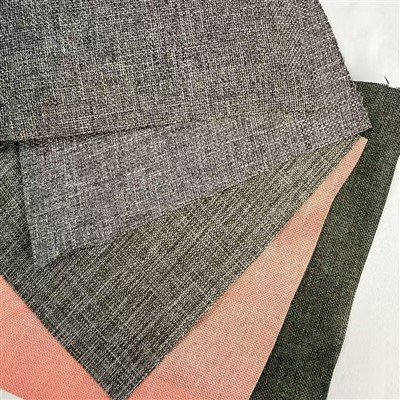
Wait, one last thing to address a question I get all the time: can it be used for other marine stuff too? Yeah, life vests, fender covers, even the canvas tops for smaller boats. But today we’re talking boat covers, and that’s where it shines the most. If you’ve got questions about anything else marine-related, or wanna grab a sample to test on your own boat, just reach out. We’ll hook you up with all the specs and tips you need.
Oxford Fabric References:
- Marine Fabric Council. (2022). Standard Test Methods for Marine Outdoor Textiles.
- Textile Research Journal. (2021). Performance of Cationic Dyed Polyester Fabrics Under UV and Saltwater Exposure.
- International Organization for Standardization. (2019). ISO 105-X12: Textiles – Tests for Colour Fastness – Part X12: Colour Fastness to Rubbing.
- American Association of Textile Chemists and Colorists. (2020). AATCC Test Method 186: Water Resistance of Textiles: Hydrostatic Pressure Test.
- Coastal Marine Supply Association. (2023). Guide to Durable Boat Cover Materials for Saltwater Environments.
Dongyang Huangxiu Leather & Plastic Co., Ltd.
With abundant experience, we are one of the most professional 1680d cationic oxford fabric manufacturers in China. We warmly welcome you to wholesale customized 1680d cationic oxford fabric made in China here from our factory. If you have any enquiry about quotation and free sample, please feel free to email us.
Address: Huangxiu Leather & Plastic Products, No. 79 Shunda Road, Huashui Town, Dongyang City, Zhejiang Province
E-mail: x372921764@163.com
WebSite: https://www.huangxiutextile.com/
