Hey everyone, if you’ve ever worked in machining, heavy equipment repair, or industrial parts fabrication, you know line boring accessories aren’t just random tools—they’re the unsung heroes that keep big, complex assemblies aligned and functional. As a line boring accessories supplier, I get tons of questions every week: “What’s the big deal with storing these parts? Why can’t I just toss them in a toolbox with wrenches and call it a day?” Line Boring Accessories

Let me cut to the chase here—line boring accessories aren’t your average hand tools. They’re precision-engineered components, and cut corners on storage? You’ll end up with parts that don’t fit, cut poorly, or worse, cause safety issues on-site. I’ve seen first-hand what happens when storage gets sloppy: a brand-new boring bar gets nicked on a sharp metal edge, a set of carbide inserts rusts before they even hit the job, alignment sleeves bend because they were stacked under a pile of worktables. That’s not just a lost sale for me—That’s a headache for a machinist who’s got a deadline to hit, or a repair shop that’s got a $100k excavator waiting to get back to work.
First, let’s break down what we’re actually talking about when we say “line boring accessories.” For anyone new here, this stuff includes boring bars (both solid and collapsible), carbide inserts, alignment sleeves, drawbars, pull studs, boring heads, and all the tiny little fasteners like set screws and collets that hold them together. Each of these parts has a specific job, and each has its own Achilles’ heel when it comes to storage.
Let’s start with the most common mistake I see people make: stacking parts haphazardly. Take alignment sleeves, for example. Those long, thin, hollow tubes are designed to hold a line boring head perfectly centered inside a bore. If you stack four or five of them on top of each other in a bin, the bottom one is going to bend—even if it’s just a little bit. That tiny bend is enough to throw off the entire alignment when you’re on a job site. Last quarter, we had a regular customer who swore our new sleeves were garbage, only to realize he’d stacked a dozen of them on a shelf that was too short, and every single one was slightly bowed. We replaced ‘em for free, but it taught him (and me) a lesson: long, thin parts don’t play well with stacking. You need to hang them or lay them flat in a rack with individual slots, so they don’t get twisted or bent. I keep a separate rack in my own warehouse for these sleeves—each one has its own slot, no touching, no stacking. Easy peasy, and it saved us so many headaches down the line.
Next up: corrosion, and I’m not just talking about surface rust. Line boring accessories, especially the carbide inserts and the high-speed steel boring bars, are made of materials that can react to moisture, even the tiny bit in the air if you’re in a humid workshop. Let’s talk inserts first—those little carbide tips are hard as nails, but they can corrode, and when that happens, the cutting edge gets dull, uneven, or even pitted. A pitted insert won’t cut a smooth bore, which means the part you’re machining will wear out faster, or not fit properly with the mating parts. We had a customer once who stored his spare inserts in a cardboard box in his unconditioned garage in Florida. By the time he went to use them, the tips had a thin layer of rust that was impossible to buff off—he had to throw away a $20 set of inserts. For smaller parts like inserts, collets, and set screws, I always recommend sealed plastic cases with desiccant packets inside. Desiccant absorbs moisture, so even if you’re in a damp area, these tiny parts stay dry. Pro tip: don’t just throw desiccant into a random bag—seal the whole thing tight, so no fresh moisture gets in. And for larger metal parts like boring bars? I keep mine in oiled cloth sleeves or wrapped in a light coat of rust-preventative oil, then stored in a dry, climate-controlled part of the warehouse. I’ve had customers store their bars in a tool chest that’s near a leaky air compressor—moisture from the compressed air got into the chest, and in a month, the bars had light surface rust. That’s an easy fix, but it’s avoidable if you just keep them away from wet spots.
Another big one: mixing different accessories together, especially when they have sharp edges or machined surfaces. Carbide inserts have super sharp cutting edges—if you toss them in a bin with wrenches or other tools, they’ll nick those edges, making them useless. Even small nicks on a carbide insert can cause it to chip mid-cut, which can ruin a workpiece and maybe even damage the boring head. I tell all my customers: keep inserts in separate compartments, not loose with other tools. Boring heads have precision-machined faces and alignment points—if you bang them against a hard surface, you’ll knock the alignment off, so when you go to put them on a bar, they won’t spin true. We once had a guy bring in a boring head that he’d stored in a tool bag with a sledgehammer. The precision gears inside were all out of whack, and he had to send it off for a $300 repair, just because he didn’t keep it separate from heavy tools. My advice? Get a set of foam inserts or individual cases for your most important accessories. It’s a little upfront cost, but way cheaper than repairing or replacing a ruined tool.
Wait, what about temperature changes? I know a lot of people work in workshops or job sites that don’t have climate control, but extreme temperature swings can cause problems too. Metal expands and contracts, right? If you store a line boring bar in a freezing cold truck bed overnight, then bring it into a hot, humid workshop during the day, the rapid temperature change can cause condensation to form on the metal, leading to rust. Also, if your accessories are made from different metals (like a steel boring bar with a carbide insert), temperature changes can cause them to expand at different rates, which might mess with the fit when you go to assemble them. I’m not saying you need to have a $10k climate-controlled storage unit—just don’t leave your tools in extreme hot or cold for long periods. If you have to transport them in a truck, wrap them in a blanket or insulated bag to minimize temperature swings. It’s a small step, but it makes a difference.
Let’s also talk about documentation and organization, which is part of storage even if it’s not physical. Line boring accessories come in different sizes—different bore diameters, different bar lengths, different insert types for different materials (steel vs. aluminum vs. cast iron). If you just dump all your accessories into a bin, you’ll spend half a job digging for the right insert or the right alignment sleeve, and you might even end up using the wrong part, which can cause errors. I label every single one of our parts when we ship them, and I tell customers to do the same. Keep a log (even a simple notebook or a note on your phone) of what accessories you have, their sizes, and when you last used them. That way, you can keep track of wear and tear too—if a bar has a nick, you’ll know to replace it before it ruins a job.
Now, as a supplier, I’m not just here to sell you parts— I’m here to help you make those parts last. I see so many guys who skip proper storage and wonder why their tools don’t perform like they should. It’s not that the accessories are bad—it’s that they weren’t cared for after they left my warehouse. I’ve had customers who told me our line boring bars last 10 times longer than the ones they bought from another supplier, and when I ask them why, they say it’s because they store them right: hung in a rack, oiled, no bangs, no moisture. That’s exactly what I’m talking about.
Let’s wrap this up with some quick, actionable tips you can start using today, no fancy storage unit required:
- For long parts (alignment sleeves, boring bars): Hang them in a slotted rack or lay them flat—never stack them vertically on top of each other.
- For small parts (inserts, collets, set screws): Use sealed plastic cases with desiccant packets to keep moisture out.
- For precision parts (boring heads, drawbars): Store them in individual, padded cases to avoid dings and alignment damage.
- Keep all accessories in a dry, cool area—away from leaky hoses, compressed air lines, or direct sunlight.
- Label everything and keep a simple inventory log to avoid mixing up parts or using the wrong size.
If you’re tired of dealing with rusty inserts, bent sleeves, and tools that don’t perform like they should, don’t just throw your line boring accessories into any old bin. Proper storage isn’t about being a neat freak—it’s about getting the most out of your tools, staying on schedule, and avoiding costly mistakes.
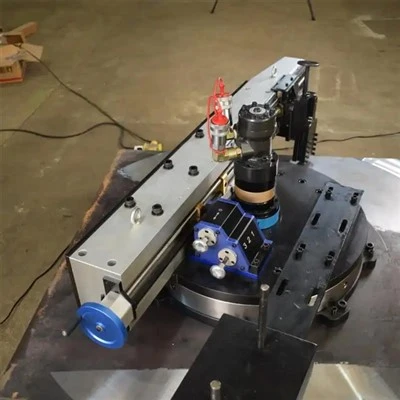
I’ve got a whole line of line boring accessories built to handle the toughest jobs, but even the best parts won’t last if you store them wrong. If you have more questions about specific parts or storage tips that work for your workshop, reach out to me. I’m always happy to help a fellow machinist or repair tech get the most out of their tools. Let’s chat about your needs, whether you need a new set of sleeves, carbide inserts, or a whole line boring setup that’s built to last. We can work out a deal that fits your budget, and I’ll even send a few extra desiccant packets to keep your parts in shape once they get to you. Don’t let bad storage ruin your next job—let’s make sure your line boring accessories are ready to perform, every single time.
Circular Mill References
Machinery’s Handbook, 31st Edition, Industrial Press Inc., 2020.
ASM International, Corrosion: Fundamentals, Testing, and Protection, 2003.
National Institute of Standards and Technology, Thermal Expansion of Metal Alloys, 2022.
Shangqiu JDA Machinery Technology Co., Ltd.
With abundant experience, we are one of the most professional line boring accessories manufacturers and suppliers in China. We warmly welcome you to buy cheap line boring accessories for sale here from our factory. Quality products and reasonable price are available.
Address: No. 55 Pingyuan Middle Road, Liangyuan District, Shangqiu, Henan, China
E-mail: sales@jdamachines.com
WebSite: https://www.jdamachines.com/
