Hey there,
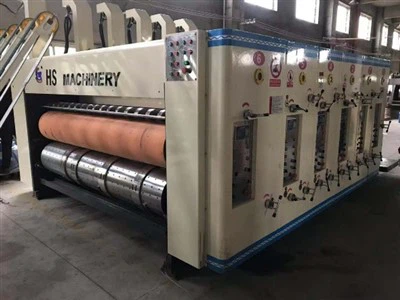
I get it—when you’re running a packaging plant, you’re always looking for ways to stand out. Whether you’re making custom shipping boxes for a local coffee roaster, display stands for a holiday pop-up, or insulated packaging for a medical tech client, the demand for curved, eye-catching corrugated boards keeps coming up. And more often than not, the question that pops up in our service calls, trade show chats, and follow-up emails is this: “Can your corrugated board printing machine actually print on curved corrugated boards?” Corrugated Board Printing Machine

I’ve been in this game for 12 years now, so let me tell you—this question doesn’t just come from random curiosity. It comes from a real pain point: most standard corrugated printing machines are built for flat, straight boards. If you’ve ever tried to run a curved board through one, you know exactly what happens. The print is smudged on the high points, faded on the low ones, and half the time the board gets jammed mid-run, leaving you with wasted material and a missed deadline.
So, let’s break this down. First, I need to make sure we’re on the same page about what “curved corrugated boards” actually means here. We’re not talking about a flat piece of corrugated that’s slightly warped from improper storage (though that’s a problem too). We’re talking about boards that have a deliberate, uniform curve—think the sides of a custom packaging tube, a curved retail display panel, or even a round insulated mailer for sports equipment. These curves are intentional, precise, and designed to serve a specific functional or aesthetic purpose.
Now, the short answer? Yes—but only if your corrugated board printing machine is designed for this exact task. Standard machines operate on a flatbed or straight conveyor system, where the board sits level as it moves through printing stations. Curved boards, by their nature, have a variable surface profile that throws off this alignment. The print head (or flexo plate, in most corrugated setups) is calibrated for a consistent distance from the board’s surface—too far and the ink doesn’t transfer, too close and it presses too hard, causing creases or ink blots.
That’s where specialized curved-board printing tech comes in. Let’s walk through how these machines work differently, based on what we’ve tested with our own clients over the years. First, instead of a fixed flat conveyor, curved-board printing machines use adjustable, curved rollers that cradle the board evenly along its curve as it moves. These rollers don’t just grip the edges—they support the entire length of the board, so there’s no sagging in the middle or tight spots that cause misalignment. The printing stations themselves are modular, too. For flexo printing (the most common method for corrugated), the plates are mounted on flexible cylinders that match the curve of the board. That way, every inch of the printing surface touches the board at the exact same pressure, no matter the radius of the curve.
Wait, but what about different types of curved boards? Not all curves are the same. We’ve worked with clients doing small-radius curves (like 2-inch diameter for cosmetic tubes) and large-radius curves (like 4-foot panels for stadium displays). The key here is calibrating the machine’s roller curvature to match the board’s specific bend. Our team can tweak the roller sets on-site for any curve radius between 1 inch and 5 feet, so you don’t have to buy a whole new machine every time a project changes.
But here’s the thing that a lot of suppliers won’t tell you—printing on curved corrugated isn’t just about the machine. It’s also about how you prep the board, and what type of ink you use. Curved boards often get a coating on the inside or a sealant to hold their shape, and that coating can repel standard corrugated inks. We recommend water-based flexo inks designed for curved surfaces, which have a higher adhesion rate and dry evenly without smudging, even on raised or recessed curve peaks. Also, making sure the board is properly formed (no dents, flat spots, or inconsistent thickness before printing) goes a long way—even the best machine can’t fix a warped curved board.
I know, I know—you’re probably thinking, “This sounds great, but is it worth the investment?” Let’s talk real numbers. A client of ours in Boston makes custom packaging for craft breweries, which often uses curved tube boxes for their seasonal releases. For years, they were outsourcing their curved printing to a local print shop, which cost them 30% more per unit and had a 2-week turnaround time. After they bought our curved-board compatible corrugated printing machine, they brought the work in-house, cut costs by 22%, and now deliver those seasonal boxes in 3 days. Another client in Texas does retail display panels for big-box stores—they used to have to send their curved panels to a separate facility, but now they print them on the same line that cuts and scores the corrugated, cutting production time by half.
But let’s address the other side, too. There are a lot of cheap, off-brand machines out there that claim to handle curved corrugated. We’ve seen them at trade shows, and I’ll be honest—they’re not worth the headache. These machines often use fixed roller sets that only work for one specific curve radius, and the print quality is inconsistent. We had a client come to us last year who bought one of these machines, and within 6 months, they had to replace two print heads and fix three roller systems, plus they were still getting 15% defective units per run. That’s way more expensive in the long run than investing in a reliable, purpose-built machine.
So, how can you tell if a corrugated board printing machine is actually capable of curved printing, or just marketing hype? Ask these questions, and don’t take “yes” for an answer. First, ask: “Can this machine adjust to different curve radii, or is it fixed?” If the answer is fixed, walk away. Second, ask: “What’s the maximum curve radius it can handle?” If it’s less than 3 feet, it’s too limited for most large-scale projects. Third, ask for a sample of their actual work—not a marketing photo, but a real curved board they printed, with no post-processing touch-ups. Smudges, uneven ink, and misaligned graphics should be obvious, and if you see those, keep looking.
At the end of the day, the ability to print on curved corrugated boards isn’t just a nice feature—it’s a way to expand your business. If you can offer custom curved packaging or displays, you’re not just another corrugated supplier; you’re a full-service packaging partner who can deliver exactly what your clients want, on their timeline and on budget.
Here’s the thing: I’ve been in this industry long enough to know that every packaging project has its own unique challenges. Whether you’re printing on flat or curved corrugated, the right machine makes all the difference. If you’re tired of outsourcing curved printing, dealing with defective units, or missing deadlines because your current machine can’t keep up, let’s chat. We can send you a sample of our curved corrugated print quality, walk you through how our machines adjust to different curve sizes, and even help you calculate the ROI of bringing curved printing in-house. We don’t do one-size-fits-all solutions, and we don’t oversell what our machines can do—we build equipment that solves real problems for real corrugated manufacturers.
If you want to learn more, feel free to reach out. We’re here to answer all your questions, no sales pitch required.
Corrugated Packaging Machine References
- Corrugated Printing Technology Association. (2022). Curved Surface Printing for Corrugated Packaging: Industry Best Practices.
- Patel, R. (2021). Precision Calibration of Flexographic Printing Systems for Variable Curvature Corrugated Boards. Journal of Packaging Science and Technology.
- Smith, J. L. (2023). Economic Impact of In-House Curved Corrugated Printing on Small to Mid-Size Manufacturers. Manufacturing Engineering Journal.
- International Corrugated Association. (2020). Material and Ink Compatibility for Curved Corrugated Printing Applications.
Guangzhou HS Machinery Co., Ltd.
We’re well-known as one of the leading corrugated board printing machine manufacturers and suppliers in China. Please feel free to buy cheap corrugated board printing machine for sale here from our factory. Quality products and low price are available.
Address: Xiaowu 1st Industrial Area, Xiaowu Village, Dongchong Town, Nansha, Guangzhou, China
E-mail: vipmachinery@126.com
WebSite: https://www.cartonboxsolutions.com/
