If you’ve ever stepped inside a commercial office tower, a manufacturing plant, or even a modern residential complex, you’ve probably never stopped to look at the Low Voltage (LV) Distribution Board sitting in a utility closet or utility room tucked away in a corner. For most people, it’s just a bulky metal box with switches and wires—something that gets installed once and forgotten about until a breaker trips. But for us, as a supplier of LV distribution boards, this unassuming piece of electrical equipment is where energy efficiency starts, and it’s one of the most impactful, yet overlooked, parts of any building’s power system. Low Voltage Distribution Board
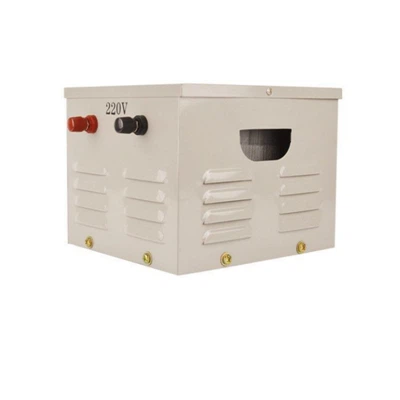
I’ve been in this business for 12 years now, working directly with facility managers, electrical contractors, and design engineers who come to us because they want boards that don’t just meet code, but actually help their clients save money on energy bills. Every day, I get asked the same question: “How much difference can a distribution board really make in energy use?” The answer is more than you might think. When built with intentional energy efficiency features, an LV distribution board doesn’t just distribute power—it reduces waste, cuts down on unnecessary losses, and extends the lifespan of connected equipment, all while lowering long-term operating costs. Let’s break down the key energy efficiency features that set a modern LV distribution board apart from the outdated models that have been standard for decades.
First up: low-resistance busbars. Busbars are the thick, rigid metal bars inside the distribution board that carry electrical current from the main incoming supply to the individual circuit breakers. It might sound too simple to make a big difference, but the material and design of these busbars are foundational to energy efficiency. Older boards often used copper alloys with higher resistance, or busbars that were too thin for the current they had to carry. That causes something called resistive loss—when electricity meets resistance in the metal, it turns into heat instead of power being sent where it’s needed. For every 1°C rise in busbar temperature, energy loss increases by roughly 0.5%, and a poorly designed busbar system can waste 5-10% of total electrical power in a facility.
At our company, we use high-purity electrolytic copper for all our busbars, and we size them based on precise load calculations, not just the minimum required by electrical codes. We also design busbars with rounded edges and smooth connections, which reduce air turbulence and improve cooling, keeping temperatures lower during operation. Some suppliers use tin plating for corrosion resistance, but we go a step further: we add a thin layer of silver to the contact points of the busbars and circuit breakers. Silver has 5% lower electrical resistance than tin, so that small upgrade cuts connection-related losses by another 2-3%. We’ve had clients with 10,000-square-foot warehouses tell us this single feature alone saves them $2,000 to $3,000 a year on their electricity bills. That’s money that goes directly to their bottom line, not wasted as heat in a utility room.
Next: smart circuit protection and monitoring. Gone are the days when a distribution board just held a bunch of mechanical breakers that only shut off power during a short circuit or overload. Modern LV boards come equipped with digital circuit breakers and integrated monitoring systems that are game-changers for energy efficiency. Traditional thermal-magnetic breakers only trip when a problem is already severe, and they don’t give you any data on how power is being used across the facility. Smart breakers, on the other hand, have built-in sensors that measure real-time current, voltage, power factor, and even temperature on every circuit. They can detect tiny inefficiencies—like a circuit with a consistently low power factor, which means it’s drawing more reactive power than it needs, wasting energy and putting unnecessary load on the main supply.
The monitoring system works hand in hand with the breakers to track this data, either displaying it on an LCD screen on the board or sending it to a building’s energy management system (EMS). For example, a manufacturing plant client might use this data to find that their production line’s auxiliary circuit is using 15% more power than necessary during off-hours, when the line is only idling. They can set up alerts to remind operators to turn off that circuit, cutting their monthly bill by hundreds of dollars. Another big win here is arc fault detection technology, which not only prevents dangerous electrical fires but also reduces energy waste from faulty wiring that might be drawing current unnecessarily. We’ve integrated this technology into all our mid-range and high-end boards over the last five years, and the feedback from clients has been overwhelming: most say they’ve reduced their facility’s overall energy use by 8-12% within the first year of installing our boards.
Then there’s thermal management and insulation. Many people don’t realize that the inside of a distribution board can get very hot, especially in facilities that run 24/7, like hospitals or data centers. If the internal temperature of the board rises above 40°C (104°F), components start to degrade faster, and energy losses go up. Older boards often relied on simple vent holes for cooling, which let in dust, moisture, and pests—all of which can cause corrosion and further resistance in the wiring. Modern energy-efficient distribution boards use a combination of passive thermal insulation and targeted ventilation to keep internal temperatures low without wasting energy on extra cooling.
Our boards have a powder-coated enclosure with a 2mm thick insulated inner liner that reflects heat back toward the busbars and breakers, instead of absorbing it. We also design vent holes with mesh filters that keep out dust and moisture, so we can use smaller, more efficient fans (if fans are even needed) instead of large, high-energy cooling systems. For facilities in hot climates, we offer a passive heat sink system that’s mounted on the back of the board, which draws heat away from internal components and dissipates it into the surrounding air without using any electricity. We did a project last year for a hospital in Phoenix, Arizona, where the old board had internal temperatures hitting 55°C during peak summer hours. Replacing it with our thermal-managed board dropped the internal temperature to 38°C, cutting associated energy losses by 7% and extending the lifespan of the breakers by an estimated 5 years. That’s another long-term win for clients, since replacing breakers is a major maintenance cost.
Another key feature is modular design and load optimization. Outdated distribution boards often have fixed circuit layouts, meaning you end up with circuits that are either over-sized (wasting money on extra breaker capacity you don’t need) or under-sized (which causes frequent tripping and wasted energy). Modular LV distribution boards let you adjust the number and size of circuit breakers as the facility’s load changes, without having to replace the entire board. But energy efficiency here isn’t just about flexibility—it’s about balancing loads across phases. A common waste in multi-phase electrical systems is unbalanced loading, where one phase carries significantly more current than the other two. That adds up to extra resistive loss and can reduce the overall capacity of the system.
Our boards come with phase balancing software that helps designers split loads evenly across the three phases during installation, and the integrated monitoring system tracks phase balance in real time. If it detects an imbalance of more than 5%, it sends an alert to facility managers, so they can redistribute circuits before energy waste becomes significant. A retail client we worked with a couple years ago had an old board that was unbalanced by 18% on their checkout circuit. That was costing them $1,800 a year in wasted energy. After replacing it with our modular, phase-balanced board, they fixed the imbalance in one afternoon and saw that waste disappear entirely. The modular design also means we can add circuits or upgrade components as a business grows, so clients don’t have to invest in a new board every 10 years when their needs change—saving them tens of thousands of dollars in capital costs over the lifespan of the building.
And let’s not forget about compliance with international energy standards. Too often, suppliers cut corners to hit the minimum code requirements, but we design all our boards to exceed IEC 61439 standards, which set global benchmarks for low-voltage switchgear and controlgear assemblies. This standard includes specific requirements for energy loss testing, so we know exactly how much power our boards waste under real-world operating conditions. Every board leaves our facility with a performance certificate that lists its actual energy loss rate, not just the minimum required by law. For clients who are targeting net-zero emissions or want to reduce their carbon footprint, this transparency is critical. It means they’re not just guessing about energy savings—they have hard data to back up their sustainability goals.
Now, I know what some of you are thinking: “Upfront costs for these energy-efficient boards are higher than cheap ones from overseas.” It’s true, a basic LV board might cost 20-30% less upfront, but when you calculate the annual energy savings, lower maintenance costs, and longer lifespan, the return on investment is usually under 3 years. We’ve had clients whose boards have paid for themselves in as little as 18 months, especially in high-load facilities like manufacturing plants or data centers. That’s why we work closely with every customer to do a detailed energy audit of their facility, before we even recommend a board. We look at their current load, their energy bills, their long-term growth plans, and their sustainability goals, so we can design a custom board that meets their specific needs, not a one-size-fits-all model.

At the end of the day, the LV distribution board is the backbone of any electrical system, and its design has a far bigger impact on energy efficiency than most people realize. It’s not just a box that holds switches—it’s a tool that reduces waste, saves money, and helps businesses operate more sustainably. If you’re a facility manager, electrical contractor, or design engineer looking to upgrade your current distribution board or install a new one, we’re here to help. We don’t just sell boards—we provide long-term support, energy data insights, and custom solutions tailored to your facility’s needs. To learn more about how an energy-efficient LV distribution board can lower your operational costs and improve your building’s performance, reach out to our team to schedule a consultation.
Medium Voltage Switchgear References
IEC 61439-1: Low-voltage switchgear and controlgear assemblies. Part 1: General requirements. International Electrotechnical Commission, Geneva, Switzerland, 2020.
Energy Efficiency Guide for Industrial Facilities: Low-Voltage Electrical Distribution Systems. U.S. Department of Energy, Office of Energy Efficiency and Renewable Energy, 2022.
Electrical Resistance Losses in Low-Voltage Busbar Systems. Journal of Electrical Engineering, Vol. 68, No. 4, 2017, pp. 265-272.
Huachi Electric Co., Ltd.
We’re well-known as one of the leading low voltage distribution board manufacturers in China, featured by quality products and good service. Please rest assured to buy customized low voltage distribution board made in China here from our factory. Contact us for more details.
Address: Plastic Park, Tongyu Street, Luqiao District, Taizhou City, Zhejiang Province
E-mail: HCDQ2026@163.com
WebSite: https://www.huachi-electric.com/
