If you’ve ever handled a chemical fiber paper tube—whether as a textile mill winding high-tensile yarn, a packaging facility rolling precision film, or even a lab working with delicate microfibers—you know how non-negotiable a smooth surface is. A single rough patch, a tiny burr, or a micro-scratch can unravel hours of winding, snags expensive chemical fiber materials, or even cause entire production runs to halt. As a third-generation chemical fiber paper tube supplier, I’ve spent 18 years in this business, and I’ve seen more than my share of tubes that failed not because they were structurally weak, but because their surfaces were just… off. Today, I want to pull back the curtain on how we ensure the smooth, consistent finish our clients rely on, and the lessons I’ve learned along the way that go way beyond following a recipe on a factory floor. Chemical Fiber Paper Tube

First, let’s ground this in why smoothness matters so specifically for chemical fiber tubes. These aren’t the cardboard cores you use for storing Christmas wrapping paper; they’re precision components for industries where tolerance is measured in microns. A 10-micron rough spot on a tube’s surface may sound trivial, but when you’re winding a 150-denier polyester yarn at 1,200 meters per minute, that tiny imperfection will catch the fiber, pull it out of alignment, and create a snarl that requires stopping the line to repair. For our chemical fiber clients, downtime costs $10,000 or more per hour on average, so a smooth surface isn’t a “nice to have”—it’s a competitive advantage. That’s why we don’t cut corners on any step of our production process, from raw material selection to final quality checks.
Let’s start with the foundation: raw material preparation. A lot of tube suppliers skimp here, using low-grade kraft paper or recycled stock that’s loaded with wood chips, metal particles, or other contaminants. But for us, raw material quality is non-negotiable. We source virgin chemical-grade kraft paper that’s specifically processed to be free of particulates larger than 5 microns. But even before that paper makes its way to our winding line, we have a critical step: decontamination and surface calibration. We run every roll of paper through two sets of air knives that blow compressed, filtered (to 1-micron) air at high pressure to dislodge any loose fibers or dust that’s settled during storage. We also use a high-resolution laser scanner to check for any unevenness in the paper’s thickness—even a 2-micron variation in a 1,000-foot roll can translate to a rough spot on the final tube. Last year, we had a client switch to a cheaper paper supplier that had hidden wood fiber contaminants; within three months, they were reporting a 12% increase in fiber snags. That’s when we doubled down on our raw material testing process, adding a third-party lab audit for every shipment to confirm purity and thickness consistency. It’s an extra cost, but it’s saved our clients thousands in downtime—and us the headache of reworking bad tubes.
Next, the winding and curing process, which is where the tube’s shape and surface begin to take form. Most suppliers use a one-step winding process, but we use a multi-stage, pressure-controlled winding line that’s been refined over a decade. Here’s the thing about winding paper into a tube: if you apply too much tension as you wind the layers, the paper stretches unevenly, creating tiny creases that become rough spots once cured. If you apply too little tension, the layers shift, leading to bulges or gaps that cause the surface to be uneven. We’ve calibrated our line to apply variable tension that adjusts based on the paper’s current layer and the tube’s diameter—starting with a lower tension for the inner layers to prevent warping, and increasing it gradually as we build up the outer layers to ensure uniform density. But even with perfect tension, the adhesive we use matters more than most people realize. We don’t use generic wood glue; we use a water-based, chemical-resistant adhesive that’s specifically formulated to cure to a smooth, rigid finish without seeping through the paper layers and creating uneven bumps on the outer surface. We also apply the adhesive using a precision roller that delivers a uniform, 0.1mm-thick coat—no thick spots, no thin areas that could cause layers to separate. Once wound, the tubes go through a slow, temperature-controlled curing process (120 degrees Fahrenheit for 72 hours) instead of being rushed through a high-heat oven. Rushing curing makes the adhesive set too quickly, creating bubbles or uneven adhesion that ruin the surface. We learned this the hard way back in 2010, when we tried to cut costs by speeding up curing; we ended up with a batch of 500 tubes that had a 20% defect rate due to surface bubbles. That mistake cost us $12,000 in reworks, but it taught us that patience in curing isn’t a delay—it’s part of the quality control process.
Once the tubes are cured and removed from the mandrel (the core around which we wind the paper), we move on to the most critical step for surface smoothness: post-processing machining. This is where a lot of suppliers save money by skipping machining or using cheap, outdated equipment, but this step is where the “raw” tube becomes the precision component our clients need. We use computer numerical control (CNC) lathes that are calibrated to within 1 micron of accuracy—no hand tools, no guesswork. The lathes trim the outer surface of the tube to remove any unevenness, minor bulges, or tiny fibers that popped up during curing. We also machine the inner diameter to be perfectly concentric with the outer surface; if the inner diameter is off by even a few microns, the tube will wobble when it’s installed on a winding machine, causing inconsistent pressure and leading to rough spots on the wound material. Last year, a textile client came to us with a tube they’d bought from a competitor; when they installed it, the wobble was so bad that it caused their yarn to break 40 times an hour. We fixed their issue by machining our tubes to a 1-micron concentricity tolerance, and their break rate dropped to less than once every 10 hours. That’s the kind of impact post-processing can make. We also do a secondary step: surface polishing. After machining, the tubes go through a fine, non-abrasive polishing process that removes any micro-scratches left by the lathe tool. We use a polishing compound that’s compatible with chemical processing (no harsh chemicals that would react with sensitive fibers) and then wipe each tube with a lint-free, ultra-microfiber cloth to remove any residue. Even with all this, we know that dust from the factory floor can settle on the tubes, so we move them directly from the polishing station to sealed, static-free packaging to keep them clean until they reach our client’s facility.
Quality control is the final guardrail for surface smoothness, and we don’t rely on just one check. First, every tube is visually inspected by our team of quality technicians, who are trained to spot even the smallest rough spot or micro-bubble. We also use a portable laser surface scanner to measure the surface roughness of each tube; our standard is a surface roughness (Ra) value of less than 0.8 microns, which is smooth enough for even the most delicate microfiber yarns. For clients with ultra-precise needs (like those working with carbon fiber or specialty medical fibers), we test every single tube, not just a sample batch. We’ve also built feedback loops with every client; when a new client first works with us, we send a sample batch of tubes so they can test them on their own winding equipment. If there’s an adjustment needed—maybe they prefer a slightly lower Ra for a specific fiber type, or a minor tweak to the tube’s diameter—we work with them to adjust our process immediately. No runaround, no excuses.
I’ve had clients ask me before, “Why does a paper tube have to be so fussy about surface smoothness?” The answer is simple: our clients’ success is our success. A textile manufacturer that uses our smooth tubes can run their line faster, produce less waste, and meet their delivery deadlines—all because we paid attention to a 10-micron detail that most people wouldn’t even notice. I’ve seen small textile startups grow into global brands because they could rely on consistent, high-quality components like our tubes, and that’s what keeps me coming to work every day.
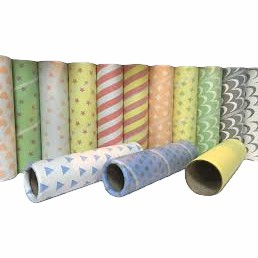
At the end of the day, ensuring a smooth surface on chemical fiber paper tubes isn’t about following a rigid set of rules—it’s about caring enough to invest in the right raw materials, equipment, and team to get it right. It’s about learning from your mistakes (like that 2010 batch of rushed cured tubes) and refining your process every single year. If you’re in the chemical fiber industry, and you’re tired of dealing with tubes that snag your materials, cause downtime, and cost you money, let’s talk. We can send you test tubes tailored to your specific application, walk you through our process, and find a solution that fits your needs. No sales pitches, no hidden fees—just a conversation with a chemical fiber paper tube supplier who’s been in this business long enough to know that smooth surfaces aren’t a luxury—they’re the foundation of your success.
Chemical Fiber Paper Tube References
ASTM D4956-21, Standard Specification for Reflectorized Sheeting for Traffic Control
Technical Association of the Pulp and Paper Industry (TAPPI) TIS 454, Surface Roughness of Paper and Board (Printing Method)
ISO 4287:2010, Geometrical Product Specifications (GPS) – Surface Texture: Profile Terms, Definitions and Surface Texture Parameters
Pinghu Henglong Paper Tube Co., Ltd.
As one of the most professional chemical fiber paper tube suppliers in China, we’re featured by quality products and low price. Please rest assured to wholesale customized chemical fiber paper tube made in China here from our factory. If you have any enquiry about quotation and free sample, please feel free to email us.
Address: Caoqiao Sub-district, Pinghu City, Jiaxing City, Zhejiang Province
E-mail: zjhmzg2011@163.com
WebSite: https://www.hengmaozy.com/
