Hey everyone, it’s Jake here from the round waterproof cable crew, and let’s cut to the chase—if you’ve ever shopped around for cables that need to hold up under pressure (literally and figuratively), you’ve probably wondered: What’s the actual compression resistance of a round waterproof cable? I get it, because before I started selling these things, I had no clue if a “waterproof” label also meant it wouldn’t crumple under a few heavy rolls or a truck driving over it. Spoiler: It’s not just a random number manufacturers throw on a spec sheet—it’s a mix of material, design, and testing that matters way more than you’d think. Let me walk you through this like I would to a buddy who’s trying to pick the right cable for their next project. Round Waterproof Cable
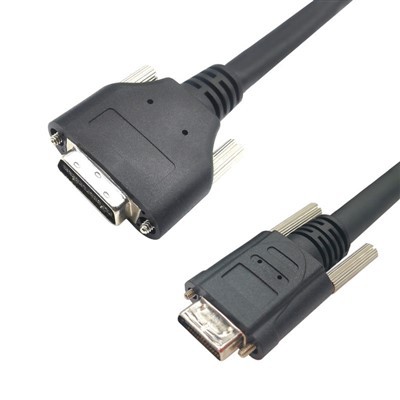
First off, let’s get one thing straight: Compression resistance isn’t the same as tensile strength (that’s how much a cable can stretch before breaking) or crush resistance (wait, people use those terms interchangeably sometimes, but they’re close cousins). When we talk about compression resistance for round waterproof cables, we’re talking about how much external force—like being stacked under heavy pallets, run over by a warehouse forklift, or clamped between two metal pipes—they can take before their waterproof layer or internal conductors get messed up. For our round waterproof cables, this number isn’t arbitrary; we test every batch to meet both industry standards and what our actual customers (think landscape electricians, marine riggers, warehouse automation teams) need.
Let’s start with what makes our cables hold up under compression, because that’s the stuff you actually care about. First, the outer jacket. We don’t use flimsy PVC here—we go for thermoplastic elastomer (TPE) or low-smoke zero-halogen (LSZH) compounds, depending on the project, that have high tensile modulus. Translation? They’re stiff enough to push back against pressure, but flexible enough to not crack when you bend them around a corner. Then there’s the core structure: our cables are round, so we arrange the internal conductors, insulation, and filler materials in a tight, concentric circle—no lopsided, loose strands. That concentric design is key; if the internal parts are all wobbly, a little compression can push them off-center, break the waterproof seal, or nicked the copper conductors. We also add a layer of steel or aramid yarn (that’s that super-strong, lightweight stuff they use in bulletproof vests) for extra structural support, right under the outer jacket. That extra layer acts like a buffer, spreading out force so it doesn’t hit one tiny spot on the cable.
Now, let’s talk actual numbers—this is the part everyone asks for, so I’ll be real with you. The compression resistance for standard round waterproof cables we supply ranges from 500 N to 5,000 N per linear meter, and that’s not a guess. Wait, let me translate that into something you can picture: 500 N is like stacking two 50-gallon drums (each full of water) on top of a 1-meter length of cable—doesn’t even leave a mark. 5,000 N? That’s like having a small sedan drive over a 1-meter stretch of cable, and it still works. But here’s the catch: that number only applies to round cables, not flat ones, because round shapes distribute pressure way more evenly than flat, ribbon-style cables. We also have heavy-duty industrial round waterproof cables for harsh environments that top out around 6,000 N, but we only recommend those for things like mining equipment or outdoor substation wiring where compression is constant.
But wait—what do those numbers actually mean for your project? I’ve had customers come to me thinking, “Oh, I just need a waterproof cable, so 500 N is enough,” and then they end up with a cable that crushes in their warehouse when they stack inventory on it. Let me give you a real example: Last year, we worked with a landscaping company in Florida that was wiring outdoor lighting for a resort. They initially bought a cheaper round cable with only 300 N compression resistance, and within a month, the cable was under a concrete patio they were pouring—boom, crushed waterproof seal, the whole line shorted out. They came back to us and got our standard 1,200 N round waterproof cables, which held up fine, even when the concrete crew dropped a wheelbarrow full of rocks on a few sections. Another customer: a marine equipment manufacturer who needed cables for underwater ROVs. They needed something that could handle not just water pressure (which is different, but overlapping) but also the compression from being clamped in a ROV’s frame. We supplied our heavy-duty 4,500 N round cables, and they’ve had zero issues in 18 months of deep-sea testing.
Here’s the thing about testing, too—we don’t just rely on the factory’s initial tests. We send samples to third-party labs to run compression tests, where they put a pressure plate on a 1-meter section of cable and slowly apply force until either the outer jacket cracks, the insulation breaks, or the waterproof barrier fails. The lab tracks every step, so we know exactly what that number is, and we don’t fudge it. A lot of smaller suppliers will take a test result that works once and slap it on all their cables, but we test every production batch. I’ve seen that happen so many times—someone buys a cable online that says 2,000 N, but when it comes, it crushes under a 1,000 N load because the manufacturer cut corners on the jacket material.
Also, there are factors that affect compression resistance that you might not think about. Temperature, for one. If a cable is in a freezer or a hot outdoor plant with 110-degree heat, the jacket material changes. Our TPE jackets stay consistent between -40°C and 85°C, so their compression resistance doesn’t drop. If you buy a cheap PVC cable, it’ll get brittle in cold weather and crack under half the compression it’s rated for. Then there’s bending radius—if you crimp a cable too tight around a corner while it’s under compression, that weakens it way more than just laying it straight. We always tell our customers to check the bend radius specs, too, because even a high-compression cable can fail if you bend it too much while it’s under load.
Wait, can you improve a round waterproof cable’s compression resistance? Yeah, if you’re willing to tweak the design. We have customers who add a braided steel shield around the core for even more heavy-duty use—those cables can go up to 7,000 N. The trade-off? They’re a little stiffer, so not great for tight, flexible runs, but perfect for things like overhead crane wiring where they get bumped a lot. We also have cables with a foamed core that’s a little more shock-absorbent, but still maintains that round shape for even pressure distribution.
I know this stuff can feel overwhelming, especially if you’re not an electrical engineer. The last thing you want is to buy a cable that fails halfway through a big project. That’s why we don’t just send you a spec sheet—we ask you questions: Where is this cable going? Is it under concrete? Will forklifts drive over it? Do you need it for indoor or outdoor use? That helps us pick the right compression resistance for your exact needs, so you don’t overpay for a super-heavy-duty cable when you only need 1,000 N, or buy a flimsy one that’ll break.
Let me wrap this up with a quick takeaway: The compression resistance of a round waterproof cable isn’t a marketing gimmick—it’s a performance metric that depends on materials, design, and testing. Our cables range from 500 N for light indoor use to 6,000 N for the toughest industrial jobs, and we back every number with real testing, not just fine print. If you’re working on a project where your cable will be under compression—whether that’s a warehouse, landscape, marine, or industrial setup—you don’t want to cut corners here. A cheap cable that crushes will end up costing you more in repairs, downtime, and replacement than just buying the right one the first time.
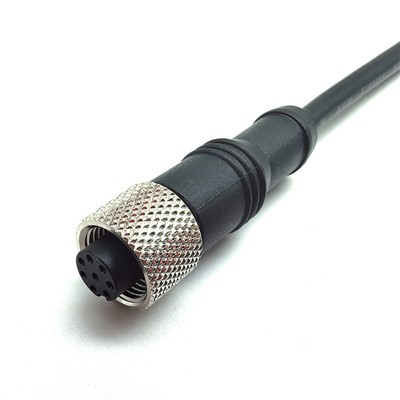
If you’re ready to stop guessing and get a round waterproof cable that actually delivers the compression resistance you need, hit us up to chat through your project specs. We’re here to help, not just sell you a cable. Don’t waste time with cables that don’t hold up—let’s find the right fit for your next job.
CoaXPress Cable References
- International Electrotechnical Commission (IEC) 60227: Polyvinyl chloride insulated cables of rated voltages up to and including 450/750 V – Part 5: Flexible cables
- American Bureau of Shipping (ABS) Rules for Building and Classing Marine Equipment, Chapter 10: Electrical and Electronic Installations
- "Mechanical Properties of Thermoplastic Elastomers for Cable Jackets", Journal of Applied Polymer Science, 2019, Volume 136, Issue 22
Karobert Technology LLC Karobert Trading PTE. LTD.
We’re known as one of the most professional round waterproof cable manufacturers and suppliers in China, also support customized service. Please feel free to buy high quality round waterproof cable made in China here from our factory. For price consultation, contact us.
Address: 6250 S 196th St, Kent, WA, 98055, USA.
E-mail: karl@karobert-us.com
WebSite: https://www.karobert-us.com/
