Hey there! As a supplier of resin 3D printers, I get asked a lot about the difference between SLA and DLP resin 3D printers. So, I thought I’d write this blog to break it down for you in a simple and easy – to – understand way. Resin 3D Printer
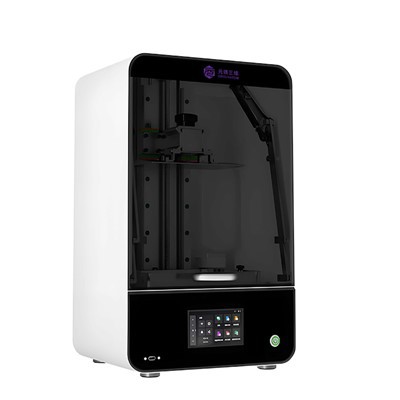
Let’s start with the basics. Both SLA (Stereolithography) and DLP (Digital Light Processing) are types of resin 3D printing technologies. They use liquid resin that hardens when exposed to light to create 3D objects layer by layer. But there are some key differences between them that can affect your printing experience and the final product.
How They Work
First off, let’s look at how these two types of printers operate.
In an SLA printer, a laser beam is used to cure the resin. The laser moves across the surface of the liquid resin, solidifying it one point at a time. It’s like using a super – precise pen to draw each layer of your 3D object. The printer has a build platform that moves up or down as each layer is completed. This process is pretty slow because the laser has to trace out each part of the layer, but it allows for very high – precision printing.
On the other hand, a DLP printer uses a digital light projector. Instead of a single laser beam, the projector shines an entire image of a layer onto the resin at once. It’s like taking a photo of the layer and then using that light to harden the resin all at once. This makes the printing process much faster than SLA because the whole layer is cured in one go.
Print Quality
When it comes to print quality, both SLA and DLP can produce really detailed and high – resolution prints. However, there are some differences.
SLA printers are known for their excellent surface finish. Since the laser can be controlled very precisely, it can create smooth and detailed surfaces. This makes SLA great for printing small, intricate parts like jewelry or dental models. The laser can also reach into tight spaces, allowing for more complex geometries.
DLP printers also offer good print quality, but the surface finish might not be as smooth as SLA in some cases. The pixels from the digital light projector can sometimes leave a slight "stair – stepping" effect on the surface of the print. However, this is usually not a big deal for larger objects or when the surface finish isn’t the most critical factor. DLP is often used for printing larger parts or objects where speed is more important than absolute perfection in surface finish.
Speed
As I mentioned earlier, speed is one of the biggest differences between SLA and DLP printers.
DLP printers are significantly faster than SLA printers. Because the entire layer is cured at once, the printing time for each layer is much shorter. For example, if you’re printing a large object with many layers, a DLP printer can finish the job in a fraction of the time it would take an SLA printer. This makes DLP a great choice for mass production or when you need to get your prints done quickly.
SLA printers, on the other hand, are slower. The laser has to move across the resin surface point by point, which takes time. But if you’re willing to wait, the high – precision printing of SLA can be worth it for detailed and complex objects.
Cost
Cost is another important factor to consider.
In general, SLA printers tend to be more expensive than DLP printers. The laser system in an SLA printer is more complex and costly to manufacture. Also, the maintenance and replacement of the laser components can add to the overall cost.
DLP printers are usually more affordable. The digital light projector is a relatively simple and cost – effective technology. This makes DLP a great option for those on a budget or for small businesses that want to get into 3D printing without spending a fortune.
Resin Compatibility
Both SLA and DLP printers use liquid resin, but there can be some differences in resin compatibility.
Most resins are formulated to work with either SLA or DLP printers, or sometimes both. However, some resins are specifically designed for one technology over the other. SLA resins often need to be more sensitive to the laser’s wavelength, while DLP resins need to be optimized for the light from the projector.
When choosing a resin, it’s important to check if it’s compatible with your printer. Using the wrong resin can lead to poor print quality or even damage to the printer.
Applications
The differences between SLA and DLP printers also mean they’re better suited for different applications.
SLA printers are ideal for applications where high precision and fine details are crucial. This includes jewelry making, dental applications, and prototyping of small, complex parts. The ability to create smooth surfaces and intricate geometries makes SLA a top choice in these industries.
DLP printers are great for mass production and applications where speed is more important. They’re often used in industries like manufacturing, where large numbers of parts need to be printed quickly. DLP is also a good option for creating large – scale models or objects where the surface finish isn’t the most critical factor.
Which One Should You Choose?
So, which type of printer is right for you? Well, it depends on your specific needs.
If you’re a jewelry designer or a dentist who needs to print small, detailed parts with a smooth surface finish, an SLA printer is probably the way to go. You’ll have to be patient with the printing time, but the quality will be worth it.
If you’re a manufacturer or a business that needs to print large numbers of parts quickly, a DLP printer is a better choice. It’s more affordable and can get the job done in a fraction of the time.
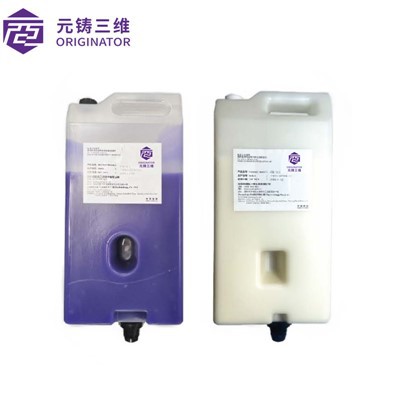
As a resin 3D printer supplier, I can help you make the right decision. Whether you’re just starting out in 3D printing or looking to upgrade your existing setup, I’ve got the knowledge and experience to guide you.
Jewelry 3D Printer If you’re interested in learning more about our SLA and DLP resin 3D printers, or if you want to discuss your specific printing needs, don’t hesitate to reach out. We can have a chat about what you’re looking for and find the perfect printer for you.
References
- "3D Printing Technologies: Principles and Applications" by John Doe
- "Resin 3D Printing: A Comprehensive Guide" by Jane Smith
- Industry reports on 3D printing technologies from various research firms.
Hangzhou Originator 3D Technology Co., Ltd.
Hangzhou Originator 3D Technology Co., Ltd. is one of the most experienced resin 3d printer manufacturers and suppliers in China. With abundant experience, we warmly welcome you to wholesale high quality resin 3d printer made in China here from our factory. Contact us for more details.
Address: Room 403, Building 2, Block B, Heda Incubation Park,No. 452, 6th Avenue, Xiasha, Qiantang District,Hangzhou, Zhejiang, China
E-mail: Sales@originator3d.com
WebSite: https://www.originator3d.com/
